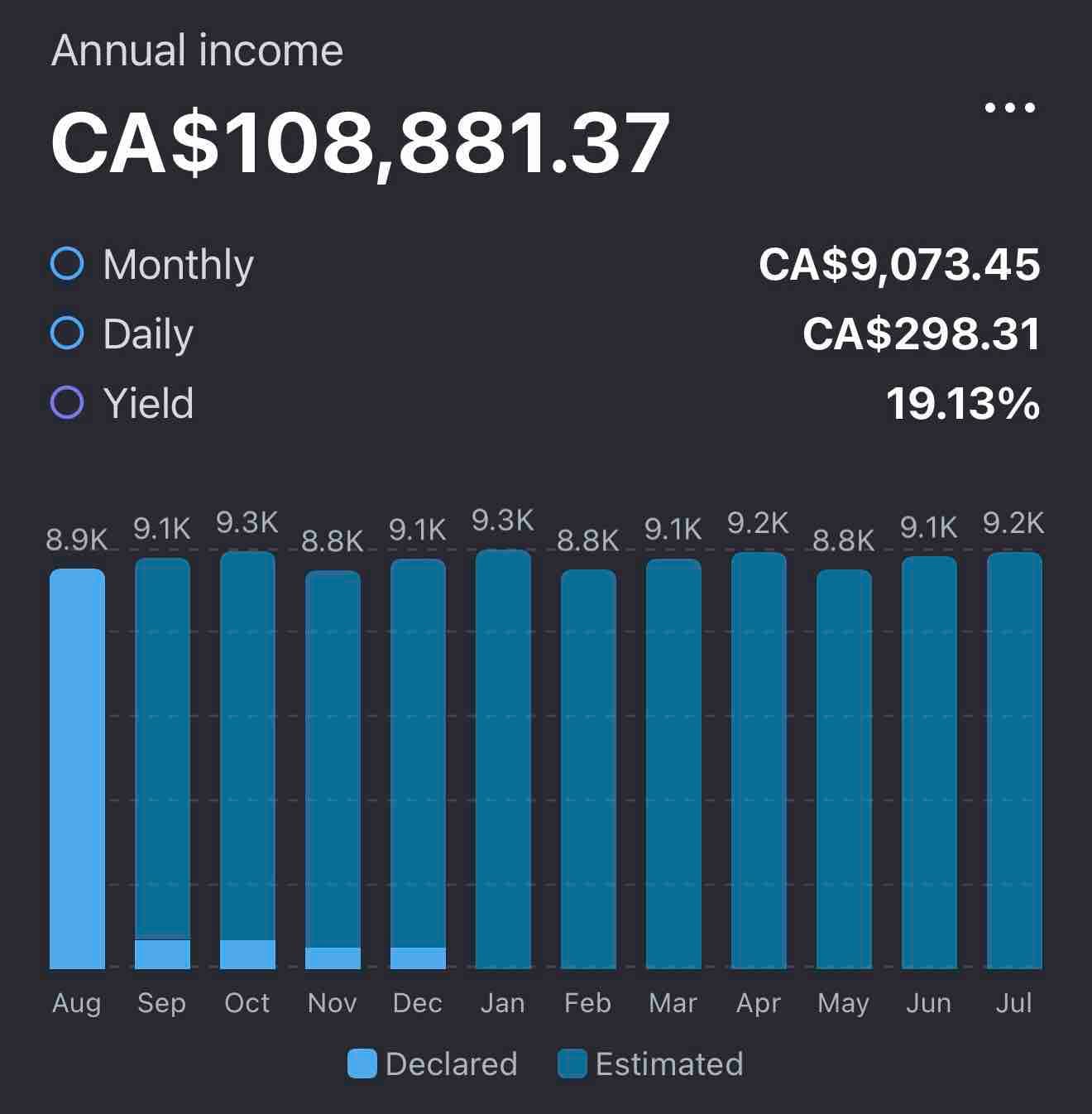
It’s been a couple of months since my last🟠MSTE🟠 investment, but I decided to reinvest my distributions. The government’s August recess may get extended past August 7th to help push the Clarity Act through — and Trump does have the authority to do that. This brought my average cost basis down to $8.68. Even if Clarity doesn’t pass, it sounds like the SEC already has a backup plan in place to provide clear rules of the road. 🟠Strategy🟠 remains the world’s largest corporate Bitcoin holder, with roughly 842,000–843,775 BTC. Recent moves show a clear shift in approach: • The company has largely paused aggressive Bitcoin buying. • It has sold modest amounts of BTC (e.g., ~1,600–1,600+ BTC in recent weeks for ~$105 million) and raised hundreds of millions by selling its own common stock (MSTR). • Proceeds are going into a growing USD reserve (now in the $3–4 billion range) to cover preferred-stock distributions (especially STRC “Digital Credit”) and other obligations. Management aims to keep at least 12 months of coverage. • Focus has moved toward capital-structure management, supporting preferreds, and potential buybacks when shares trade below perceived intrinsic value, rather than pure BTC accumulation. Saylor and the company still frame Strategy as a long-term Bitcoin treasury / leveraged Bitcoin proxy, but the near-term priority is balance-sheet resilience and preferred-share support. SEC Chair Paul Atkins has been explicit: the agency is “ready, willing, and able” to issue its own rules covering the same issues (and more) if Congress fails to act. This has been described as the SEC’s Plan B / part of “Project Crypto.” • The SEC (with the CFTC) already issued joint interpretive guidance in March 2026 classifying Bitcoin and certain other assets as digital commodities. • Atkins has said the agency can move forward on clearer rules for fundraising, custody, tokenized securities, on-chain trading, and related areas either to implement Clarity or as a standalone path. https://youtu.be/bs6yz79MneQ?si=GZ8NdK2cxu2trjj-read more
Dividend Vision allows you to check your dividend safety score , risk of portfolio , make projections and search every stock and ETF . Keep a eye on stocks and ETF on your watchlist or upload your portfolio to keep track of performance Being on the Board of Advisors I will give you a free 7 day trial to check it out www.dividendvision.com/?via=theedgereport
May — $739.28 June —$751.98 July — $776.23 August — $758.56 so far And with the second CANY payment of $41.54, August will reach $800.10 CAD 🎉 $800/month = ~$9,600/year in portfolio distributions on my TFSA income portfolio currently valued at $57,200. Every distribution is being reinvested. 🔄 Next milestone: $1,000/month. 🚀read more
Curious to hear what everyone’s favourite income-generating ETFs on the TSX are. Which ones have provided you with strong and consistent distributions, and how long have you held them? I’m currently holding $MSTE, $XEI and so far I’ve been happy with the income it’s generated. I’m looking to explore other income-focused ETFs as well. Would love to hear what’s been working for you.
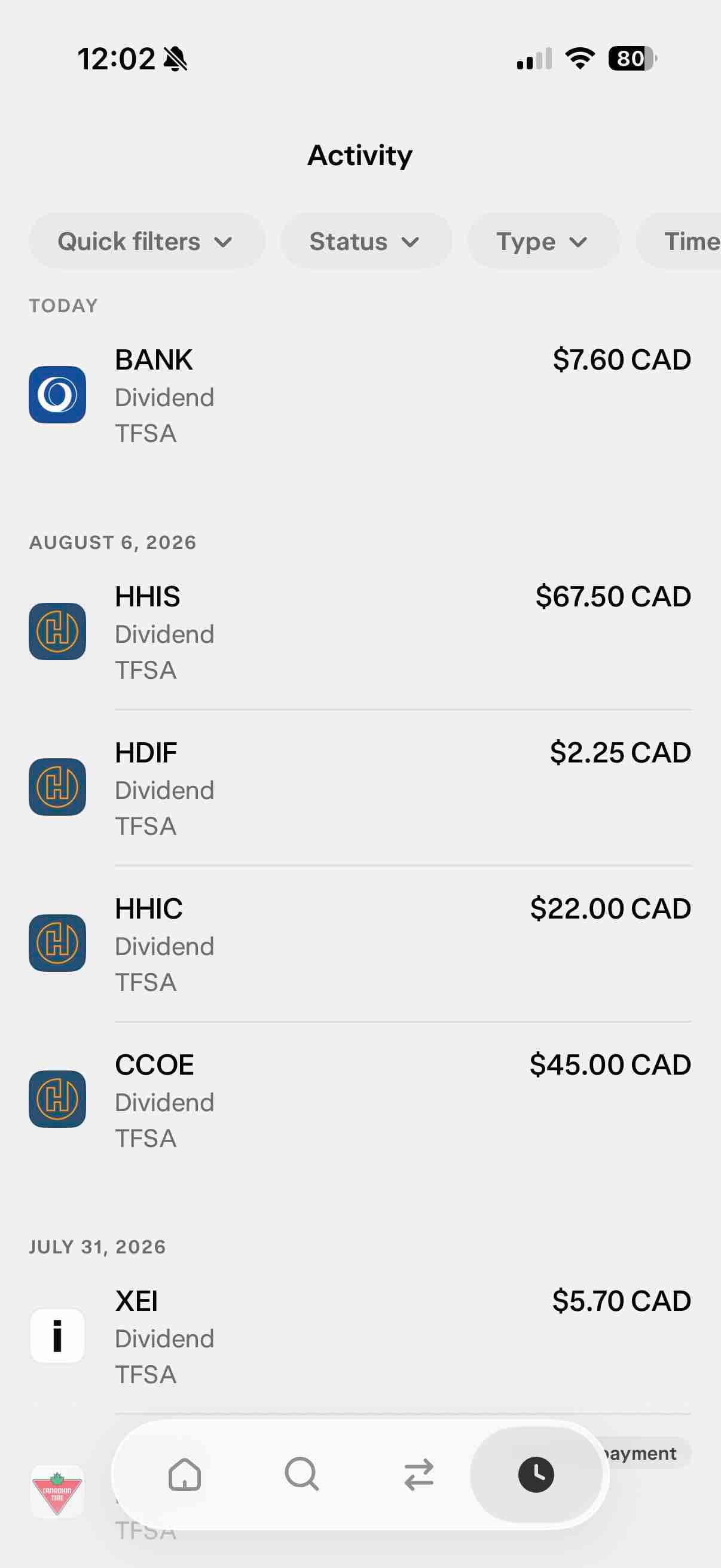
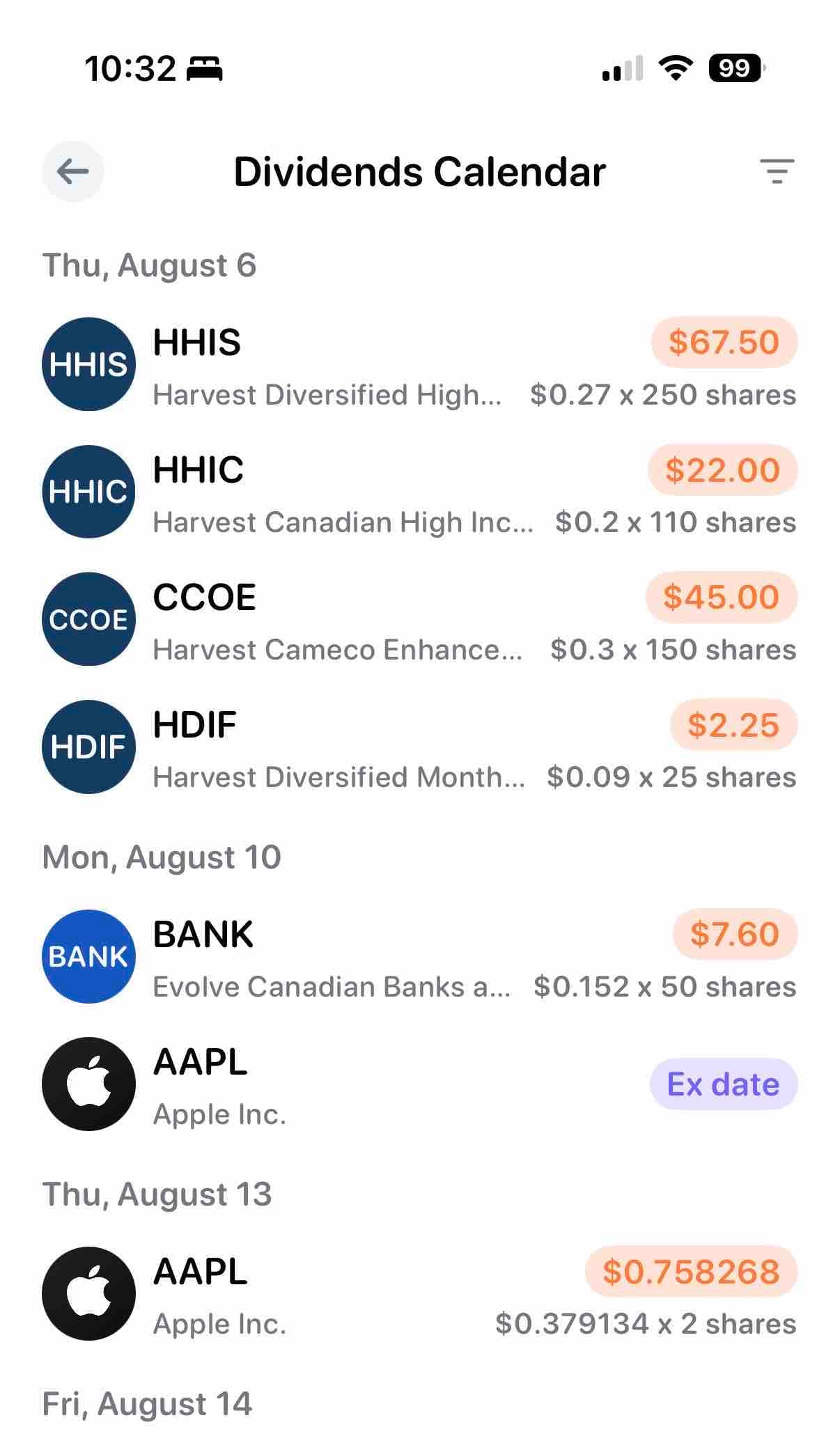
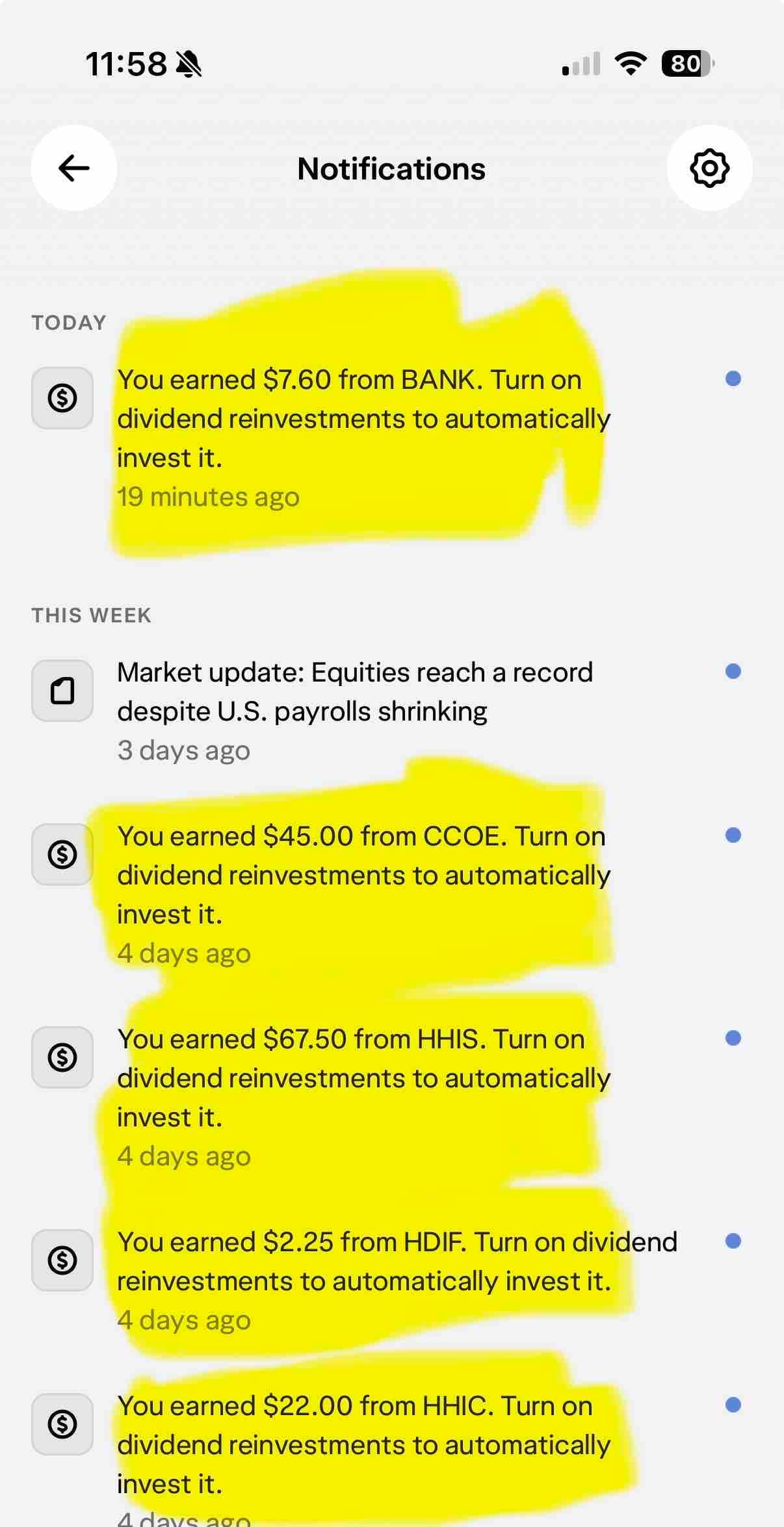
Happy Monday !! What a great way to start the week wit your phone chiming of dividend notifications 🔔! Last month I sold off all of my positions in Telus .I had almost DCA’d this stock from 30 $ to 19$ since 2021 when I first got it , but it still kept going down! Even though it was giving good dividends . Management overhaul and even the distribution has changed! Financials have taken a hit since acquiring the wireless startup ! I reinvested the funds in $HHIC and $CCOE. Again these are covered call ones but Telus is included in them and any price drop offset will be reduced by other ones in the ETF portfolio. Both have good distributions: $HHIC :0.20$ monthly $CCOE: 0.30$ monthly Received dividends for the following ones: $HHIS: $67.50(250 qty) $CCOE:$45(150 qty) $HHIC:$22(110 qty) $BANK:$7.60(50 qty) $HDIF:$2.25(25 qty) In July end had received for : $BNS:$4.6 $CM: $8.56 $XEI:$5.70 Moving towards the monthly target of 200$ and yearly 2500$. Will reinvest the dividends Monday motiovation! Happy investing!😎🚀 Stay consistent, stay invested , unleash the power of compounding by reinvesting all the dividends !!💵💵 read more
🎉 $100,000 Portfolio Milestone! 🎉 I finally reached $100K in my investment portfolio! 🥹📈 My journey started in April 2022, when I was still studying. I didn’t have a huge income or a perfect investment strategy. I simply started by saving money, cutting unnecessary expenses, and investing whatever I could. I still remember my first-ever monthly dividend: $19.52. At the time, it felt like such a small amount, but it was the beginning of something much bigger. Fast forward to today… my portfolio generates around $1,100/month in dividends. 💰 My goal isn’t just to build wealth for the sake of having a big number. I’m building this portfolio with a purpose — financial freedom and eventually helping fund a future home purchase. 🏡 I’ve definitely made a few mistakes along the way. Some investments worked out, some didn’t, and I’ve changed my strategy many times as I learned more. But I’m actually grateful for those mistakes because they taught me lessons that no book could. Looking back at where I started in 2022, I’m really happy with the progress. ❤️ $19.52/month → ~$1,100/month $0 → $100,000 portfolio The next goal? $250K. Then $500K. Then $1M. 🚀 Still a long way to go, but I’m enjoying the journey. One dollar, one dividend, and one investment at a time. Here’s to the next chapter! 🥂📈 #Investing #DividendInvesting #100KPortfolio #FinancialFreedom #PersonalFinance #WealthBuilding #InvestingJourneyread more
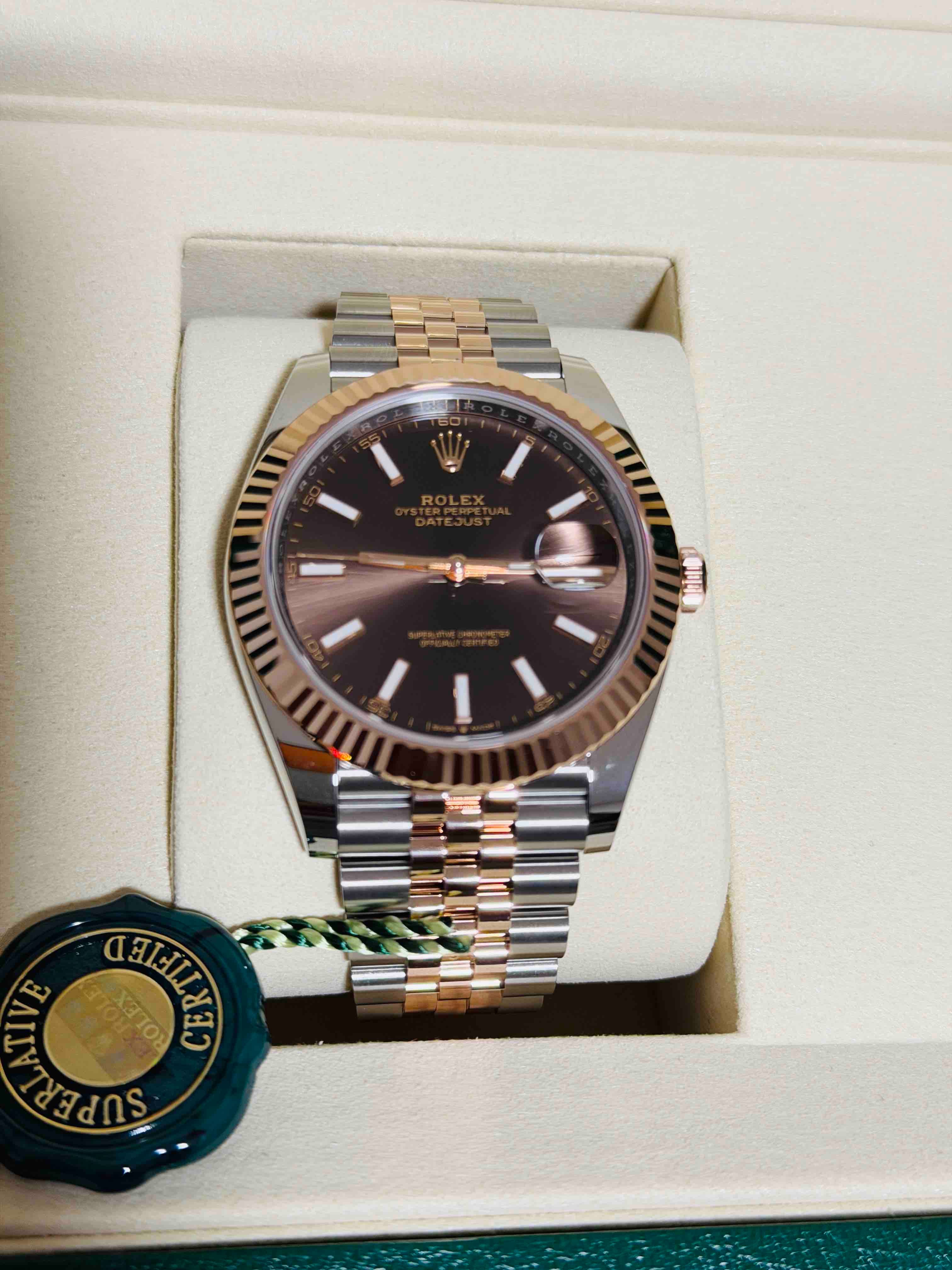
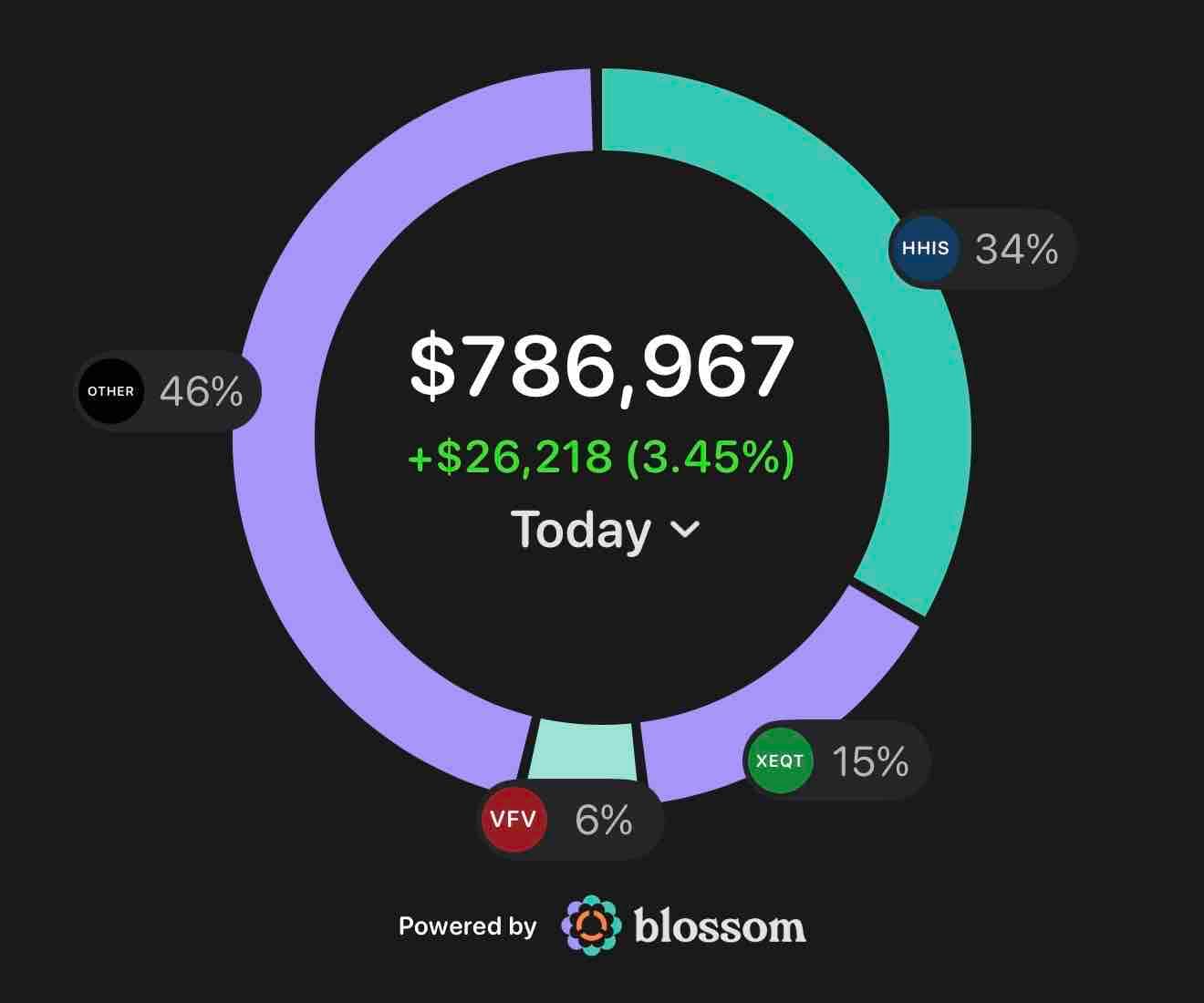
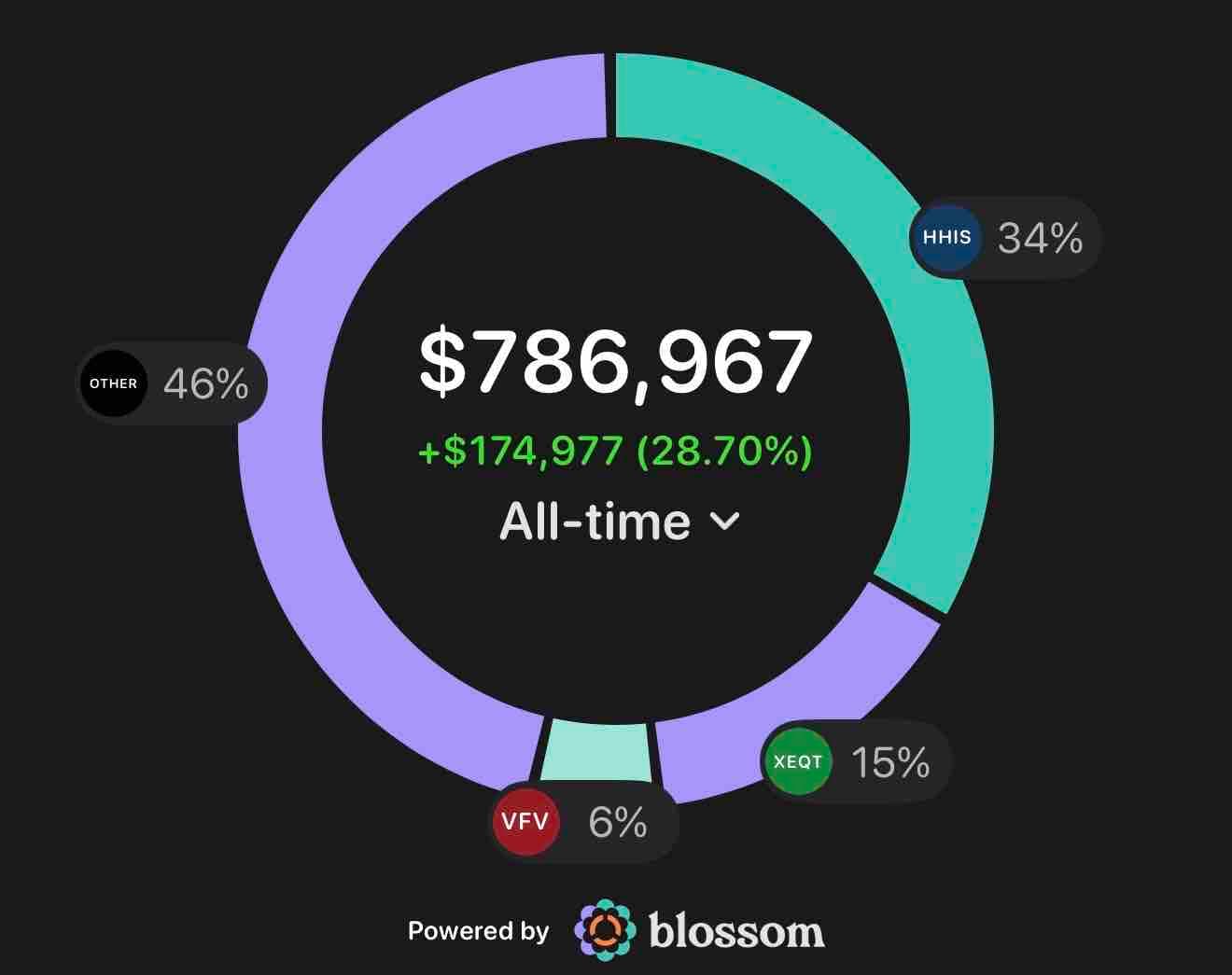
Everyone has their own investing style, Mine is a blend of growth and income. Last month, I was finally able to buy my dream Rolex using money from my investments. I've been hesitant to share it because I didn't want it to come across as showing off or make people think differently of me. But then I realized this community has been a huge part of my journey. Blossom has taught me so much, and this milestone belongs as much to the lessons I've learned here as it does to me. As my portfolio gets closer to $800k, I'm reminded that the market keeps us humble. That's a lesson I never want to forget. I'm grateful for how far l've come but there's still so much to learn. I am just a novice investor who likes to play around lol. Thank you to everyone here for sharing your knowledge and experiences. Wishing you all success on your own investing journey. Stay Safe- Stay Invested ✌🏻 read more
Another upcoming great week, another round of investing🔥 Today I had little extra money and really wanted to invest, so I bought $150 more in $VFV. This is the core ETF in my portfolio and I'm trying to build this position to make around 40%-45% of it. Road To $20,000💸 I'm curious what you guys buying/watching this week, let me know below.⏬
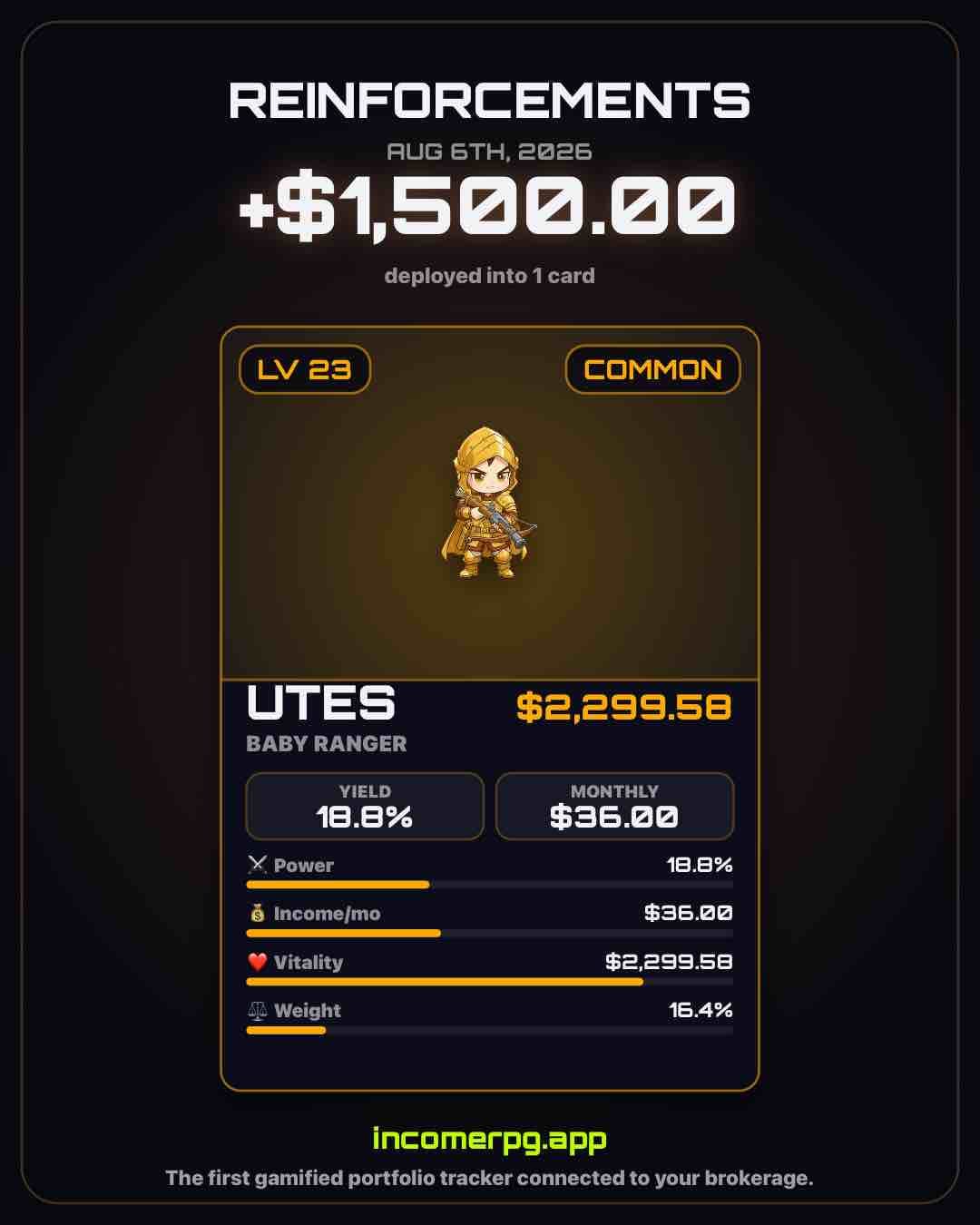
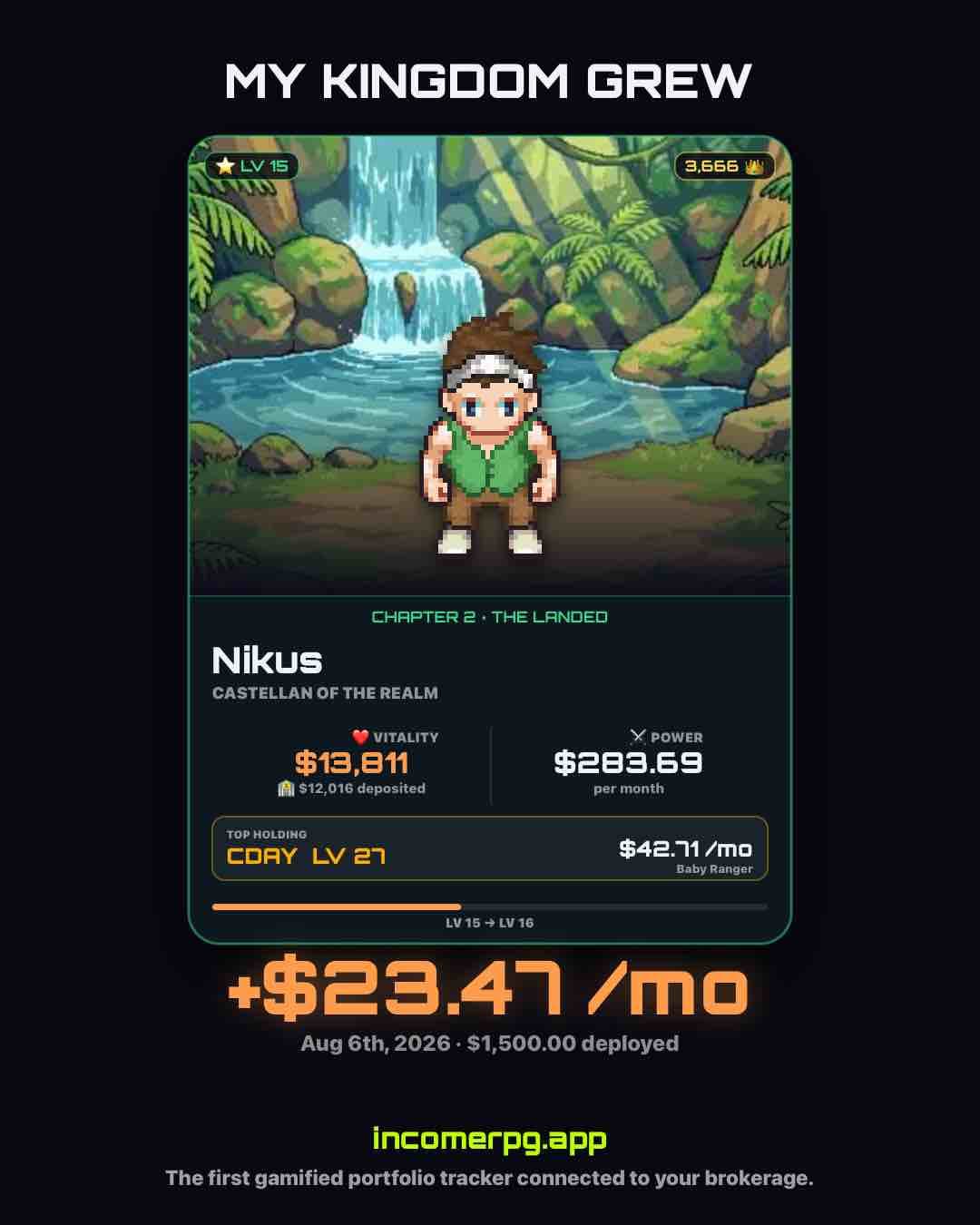
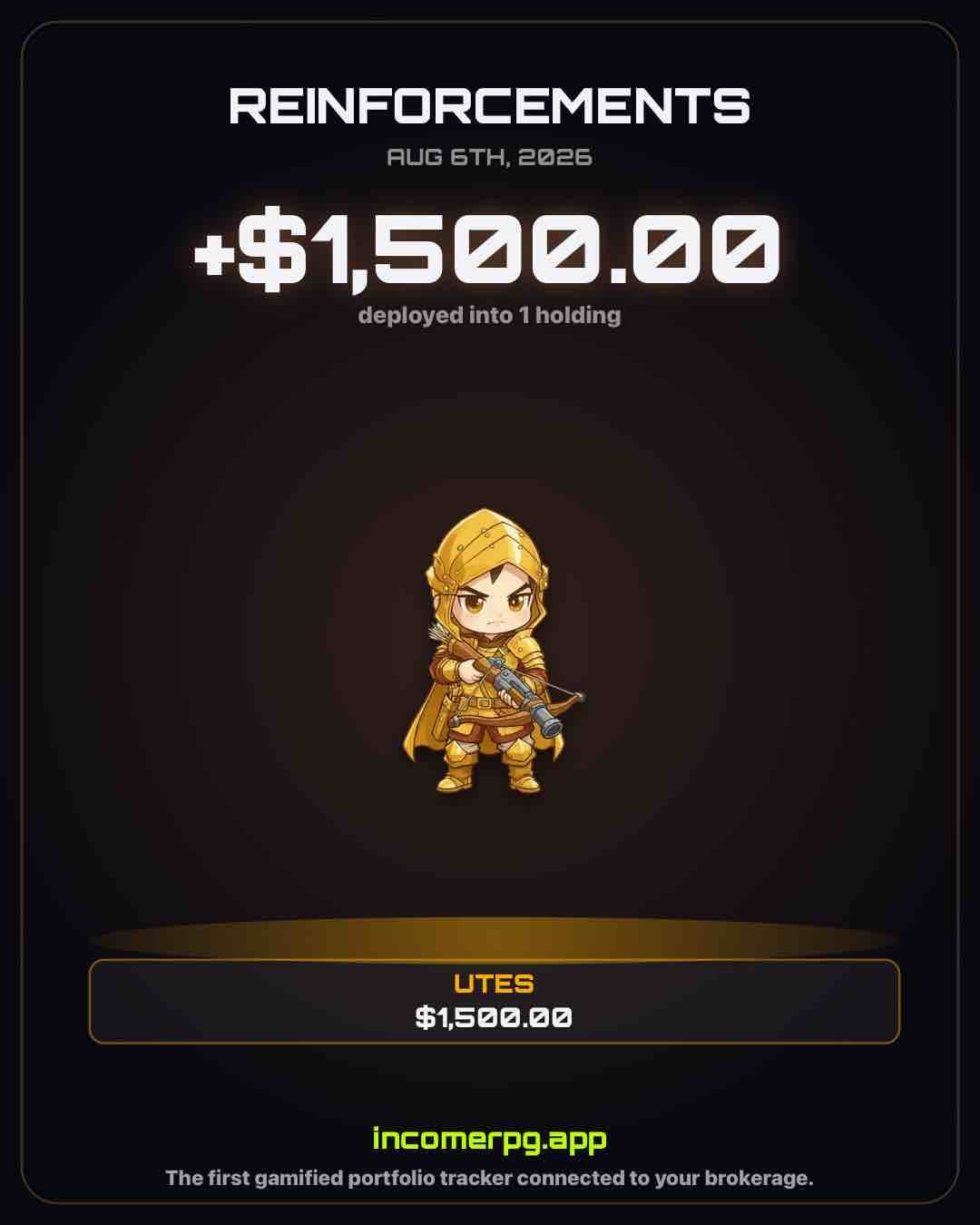
Happy investing day! Added another $1,500 into $UTES as it hits an all-time low. What are your thoughts? Are you guys loading up on funds like $UTES$UMAX$ZWU$HUTS$XUT
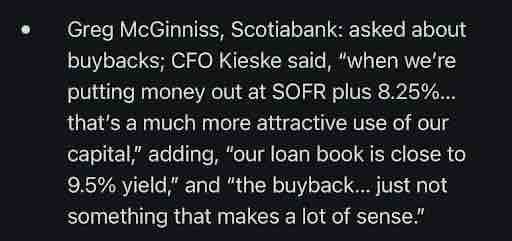
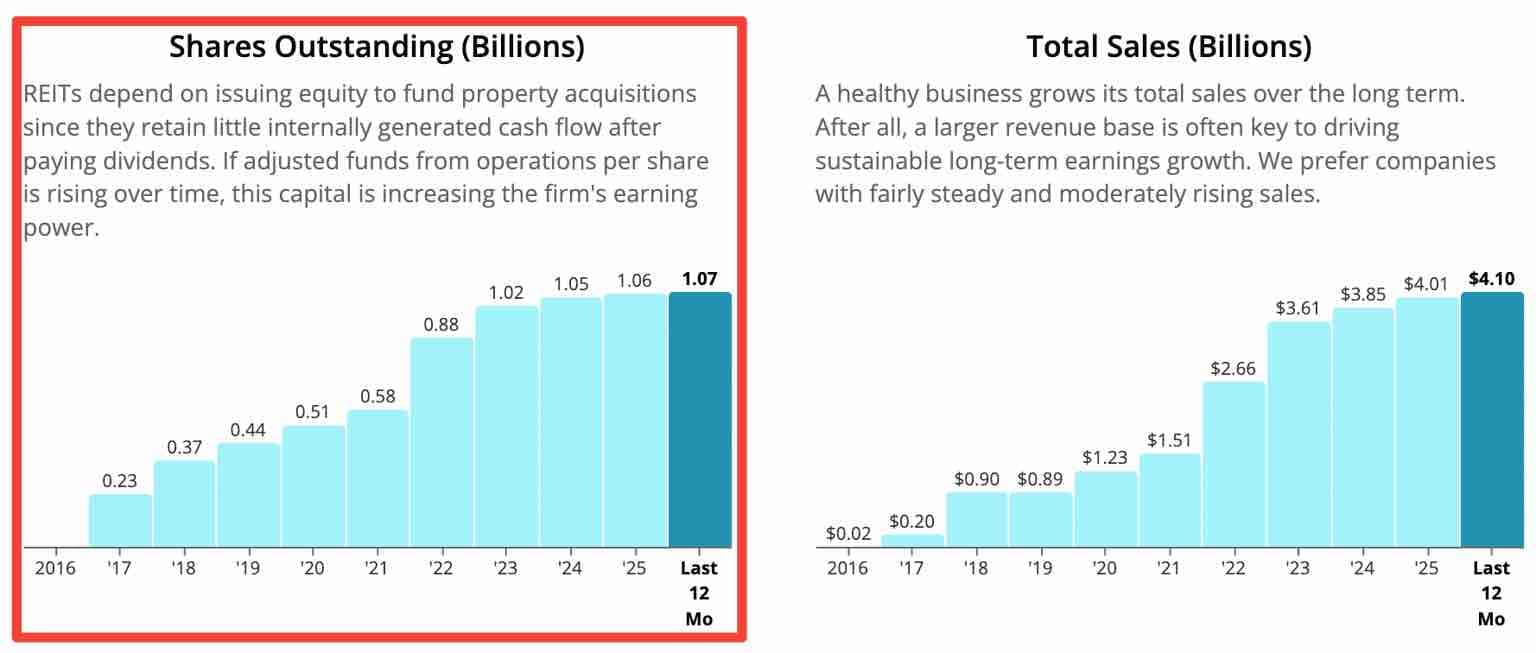
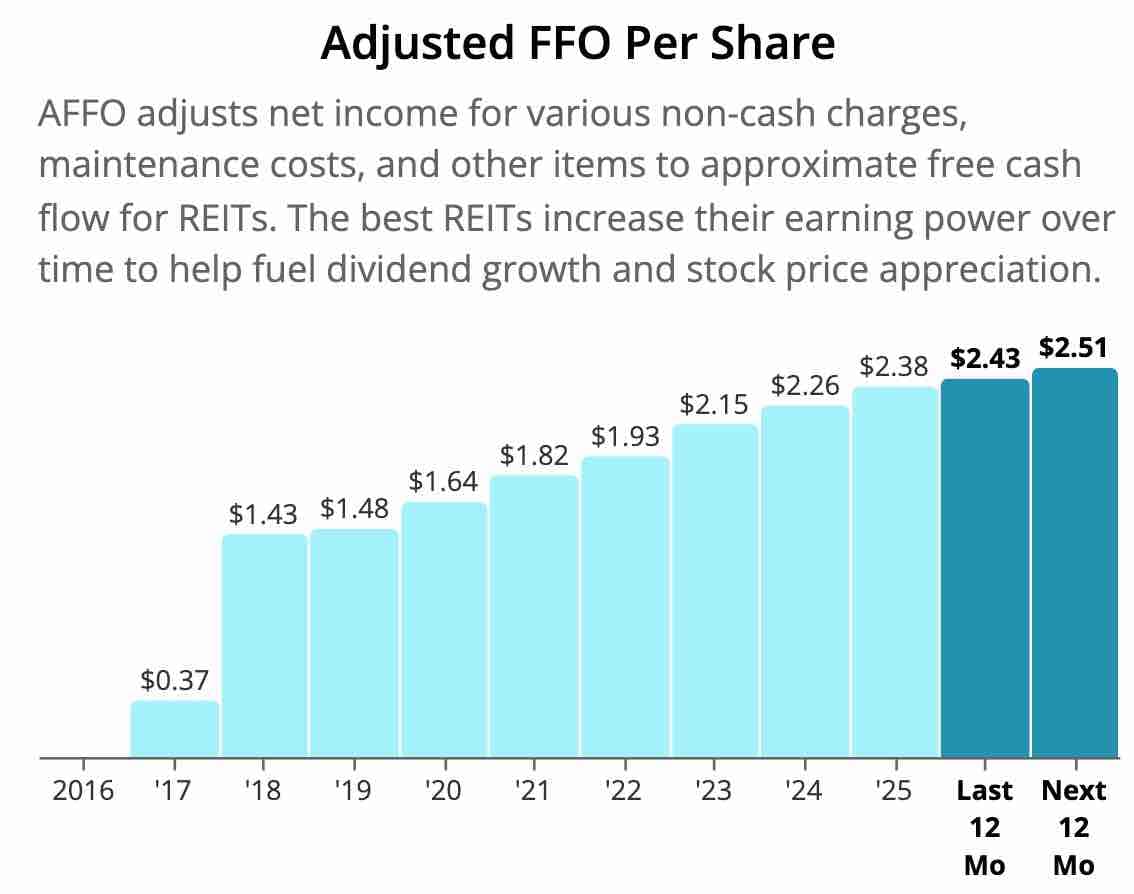
So I'm listening to the VICI Properties ($VICI) earnings call last week and an analyst asks about buybacks. The stock's been crushed, sitting near its 52-week low. So why not buy some of it back? The CFO basically said no thanks. And the reason he gave is something I don't think most people know, so let me try to explain it, because I've seen social media posts ripping REITs for "diluting shareholders" and there might be some confusion. A REIT (Real Estate Investment Trust) is just a publicly traded landlord you can buy a piece of that owns property and collects rent. The catch is the tax deal — to skip corporate taxes, a REIT has to hand over at least 90% of its taxable income to shareholders as dividends. That's because a normal company earns a profit, pays corporate tax and can sit on it, reinvest it, do whatever. A REIT can't. It's like being legally required to spend 90% of every paycheck the day it clears. So how does a REIT ever grow? It goes and gets money from somewhere else by selling new shares and borrowing money. Then it buys, builds or develops land or buildings that earn more than the money cost to get. That's the super simple explanation. But a buyback shrinks the company and for a REIT that's sort of going in reverse. There's not a big pile of retained cash sitting around, so every dollar spent buying back stock is a dollar not spent buying a building. And VICI's CFO mentioned the math on the call, which I loved. They just made a loan earning SOFR plus 8.25%. SOFR is just the base interest rate the big lenders build loans on top of — it's around 3.65% right now, so that loan is throwing off about 12%. Their whole loan book is close to 9.5%. And with the stock at around $27 against roughly $2.46 of AFFO per share is about 9%. Even though VICI's main game is owning physical buildings, they sometimes provide high-interest development funding to partners. The CFO is telling us that right now, lending money out at 9.5% to expand their future pipeline is a much smarter, more profitable use of cash than buying back their own stock. Which brings us to dilution. VICI's share count went from about 370 million in 2018 to 1.07 billion today. Almost triple. Sounds like a disaster if that's the only number you look at. But over that same stretch AFFO per share went from $1.43 to $2.43, up about 70%. Real quick on AFFO — it stands for adjusted funds from operations and it's basically free cash flow for a REIT. Regular earnings are useless for these guys because accounting rules make them depreciate buildings that are actually going up in value. AFFO cleans that up. That's the whole test and it's simpler than people make it: dilution only hurts you if the money they raised earns less than it cost them. AFFO per share going up means the new shares are pulling their weight. Bit if AFFO per share is flat or falling while the share count balloons? That's a red flag. One thing though — don't just use revenue growth as your proof. A REIT can grow revenue fine while the per-share value quietly shrinks. I go straight to AFFO per share for that warm and fuzzy feeling. I also used to think that a REIT buying back stock is a red flag, like they've admitted they can't find anything better to do with the money. And sometimes that's exactly what it is. But it can also be the smartest thing they do all year — if the stock is trading way below what the buildings would actually fetch in a sale, buying shares is buying real estate at a discount. So it's not a red flag, it's a flag that needs context. The question I'd ask is just: is the stock cheaper than the buildings? If yes, fine. If no, why are we doing this. And if they're borrowing to fund it, that's a whole separate conversation. Anyway. REITs don't buy back stock because the tax code forces them to pay out their cash and go raise more. Issuing shares isn't a bug, it's a feature of successful REITs. Judge them on AFFO per share and you'll be ahead of most people posting about REIT dilution online.read more
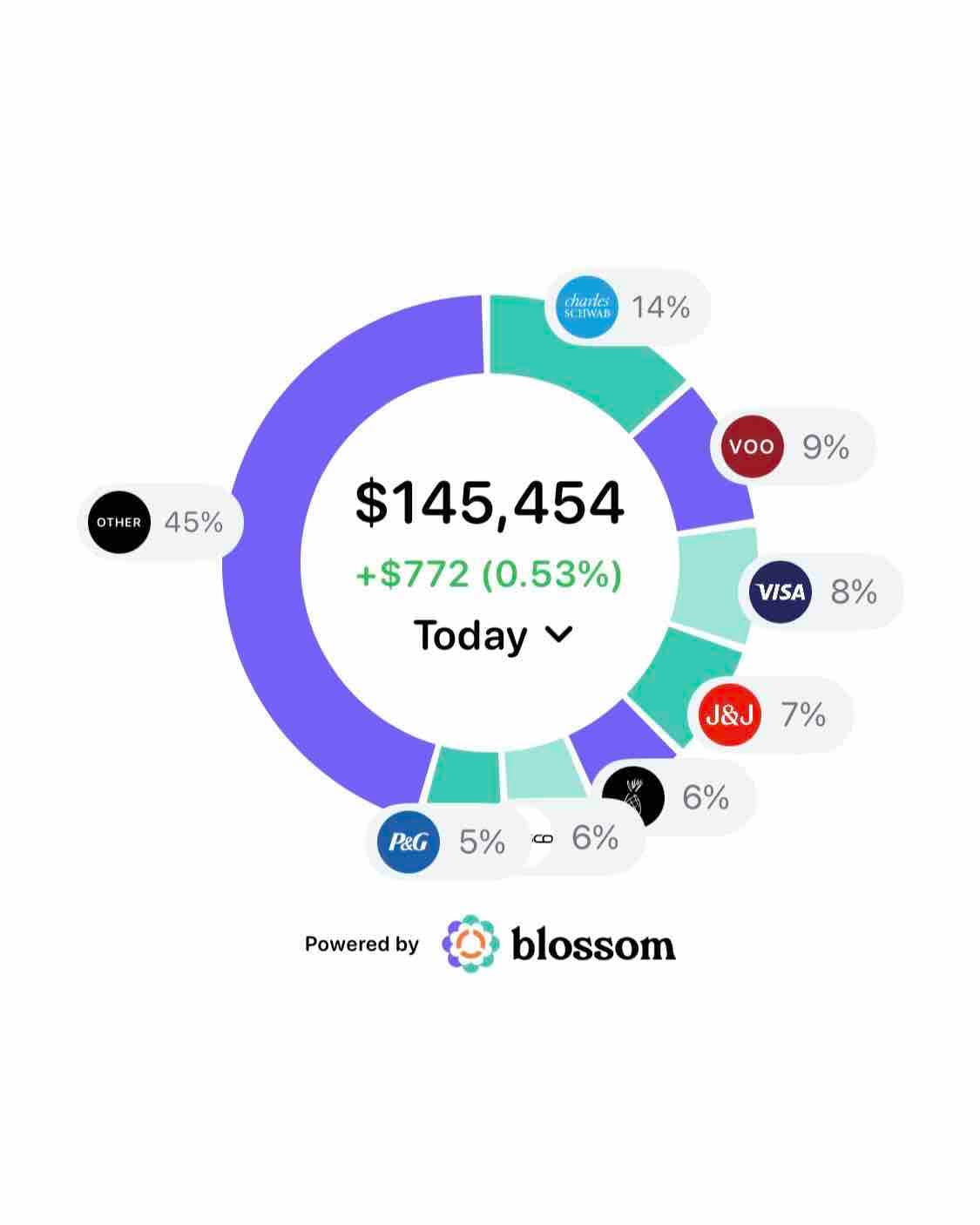
Wealthsimple has a feature called “Portfolio Pulse”whereby you can be that proverbial “fly on the wall” and look into the private portfolios published anonymously. I found this to be a very interesting exercise. I reviewed the top 100 portfolios but examined in detail the top 10. #1 is $49,148,421.83 #2 thru 10 range between $15,147,052.02 to $8,767,708.57 As more investors elect to publish their portfolios the more we will get to see, but after looking at the top 100, there is a repeatable common portfolio structure to all of them and I developed a quick method to examining them into categories. This method you can actually use to examine Blossom portfolios. This is regardless of account type like 401K, RRSP etc. and more about being able to understand the portfolio as a “whole” and how it is “constructed”. So let’s start. Core → Satellites → Concentration (Risk Character). 1) Core = the “engine” Ask: What’s the #1 holding (or top 2–3 combined)? This tells you what the portfolio is really about and the investor. Common cores: - Broad index core (US/global equity ETFs) - Factor core (quality / low-vol / dividend-tilt style ETFs) - Theme core (tech/semis/innovation basket) - Single-name core (one stock dominates) If you can identify the core in less than 10 seconds, you’re already ahead in portfolio diagnosis. --- 2) Satellites = what it’s “tuning” Satellites are the positions that sit next to the core and change the risk/return personality. Typical satellite buckets: - Growth / Theme tilts (tech, semis, AI, platforms) - Income / defensive tilts (dividend ETFs, more defensive-style exposures) - Real assets / REIT sleeve - Currency/cash proxy (large USD or CAD allocation acting like “liquidity bias”) - Additional factor overlays (value, momentum, small-cap, etc.) Key intuition: Satellites usually explain the “why,” while the core explains the “what.” --- 3) Concentration = the “how risky is this?” reality check Don’t overthink it—just eyeball concentration: - Diversified: no single position dominates; many meaningful holdings - Moderately concentrated: top holdings matter, but it’s not “one bet” - Highly concentrated: one name (or one theme) is doing most of the work This matters because two portfolios can both be “growth,” but one is *one big bet* and the other is *a diversified growth tilt.* --- The 6 portfolio types this creates (simple labels) Once you’ve identified Core + Satellites + Concentration, you can usually label the portfolio quickly: 1) Index + Tilt - Broad equity core + a few purposeful overlays. 2) ETF Ladder / Multi-Core - Multiple big ETFs spanning regions/styles (often US + Canada + international + value/RE). 3) Theme Basket - A theme is the core and dominates the holding list. 4) Single-Name Conviction - One stock is the core; the rest are supporting actors. 5) Income / Defensive Overlay - Dividend/income/defensive exposures are prominent, even if equity-heavy. 6) Core All-Equity (near-passive) - Mostly one or two broad all-equity ETFs, with minimal satellites. --- A quick 30-second “portfolio read” checklist When you open holdings: 1. Circle the core: What’s #1 (and #2/#3 if close)? 2. Label satellites: Are the other big lines income/defensive, theme, real assets, or currency? 3. Check concentration: Is it diversified, moderate, or dominated by one bet? If you do this consistently, you will start to be able to see the patterns, the portfolios will stop looking like a bunch of tickers, and you start to see them by their architecture, structure, core, shell, diversification, allocation, and risk and then you will see by the daily and annual returns how these portfolios performed against the macroeconomic and market conditions and WHY. Only then can you call yourself an investor, when you can examine a portfolio and determine its structure, risk and the alignment of its return against the current economic and market backdrop.read more
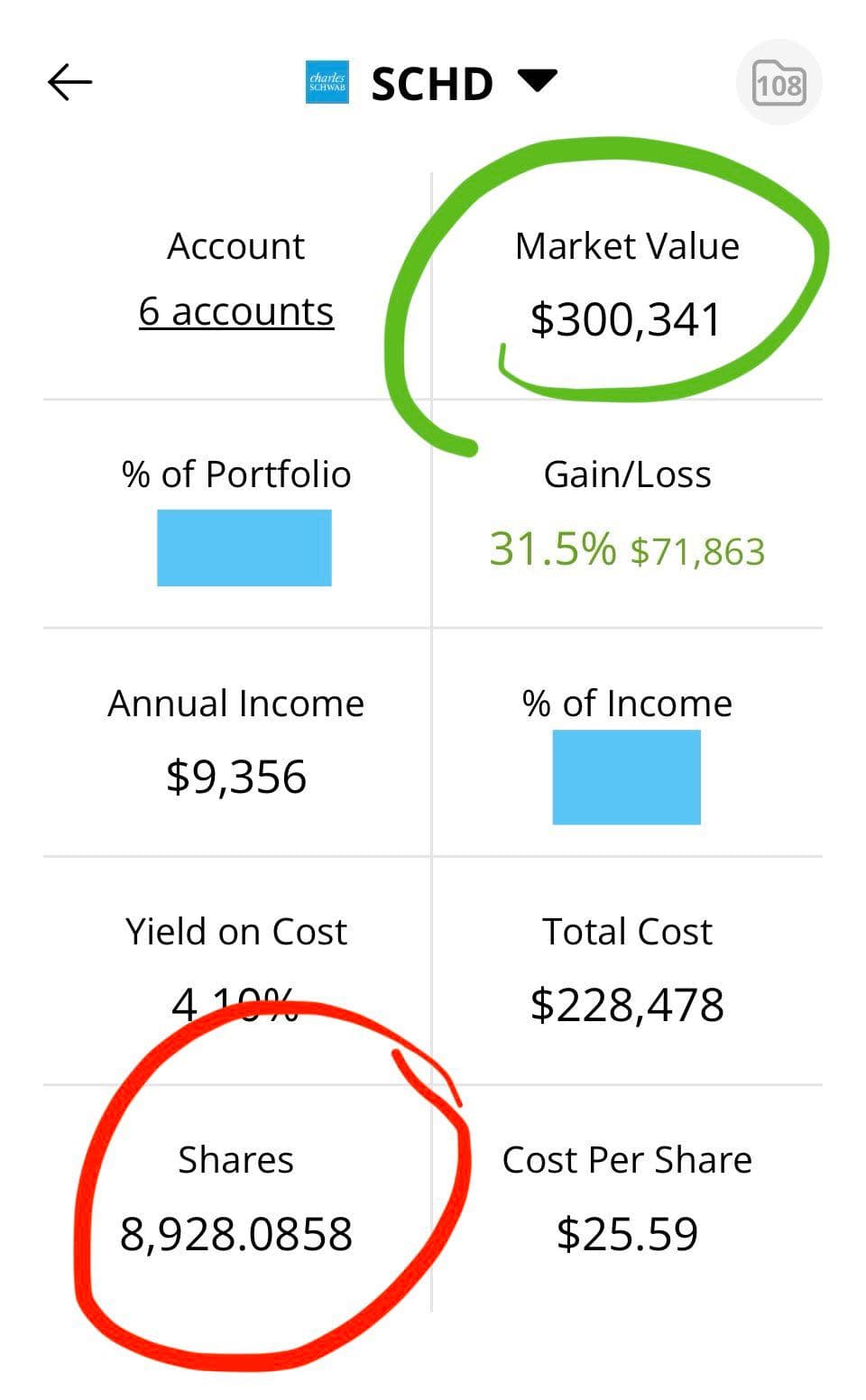
I set a target of reaching 9,000 shares of $SCHD by the end of July. After adding one more share yesterday, I’m currently sitting at 8,928.1 shares. It’s the first target I’ve missed since I started setting share goals back in 2022. Could I have forced my way to the goal? Absolutely. But with $SCHD trading near all-time highs at the end of July, I saw better opportunities across other stocks and ETFs in my portfolio and chose to allocate capital there instead. Not every goal gets achieved exactly on schedule. The bigger goal is following the process, and making decisions based on opportunity not forcing a purchase just to check a box. Still one share closer to $1 million in $SCHD .read more
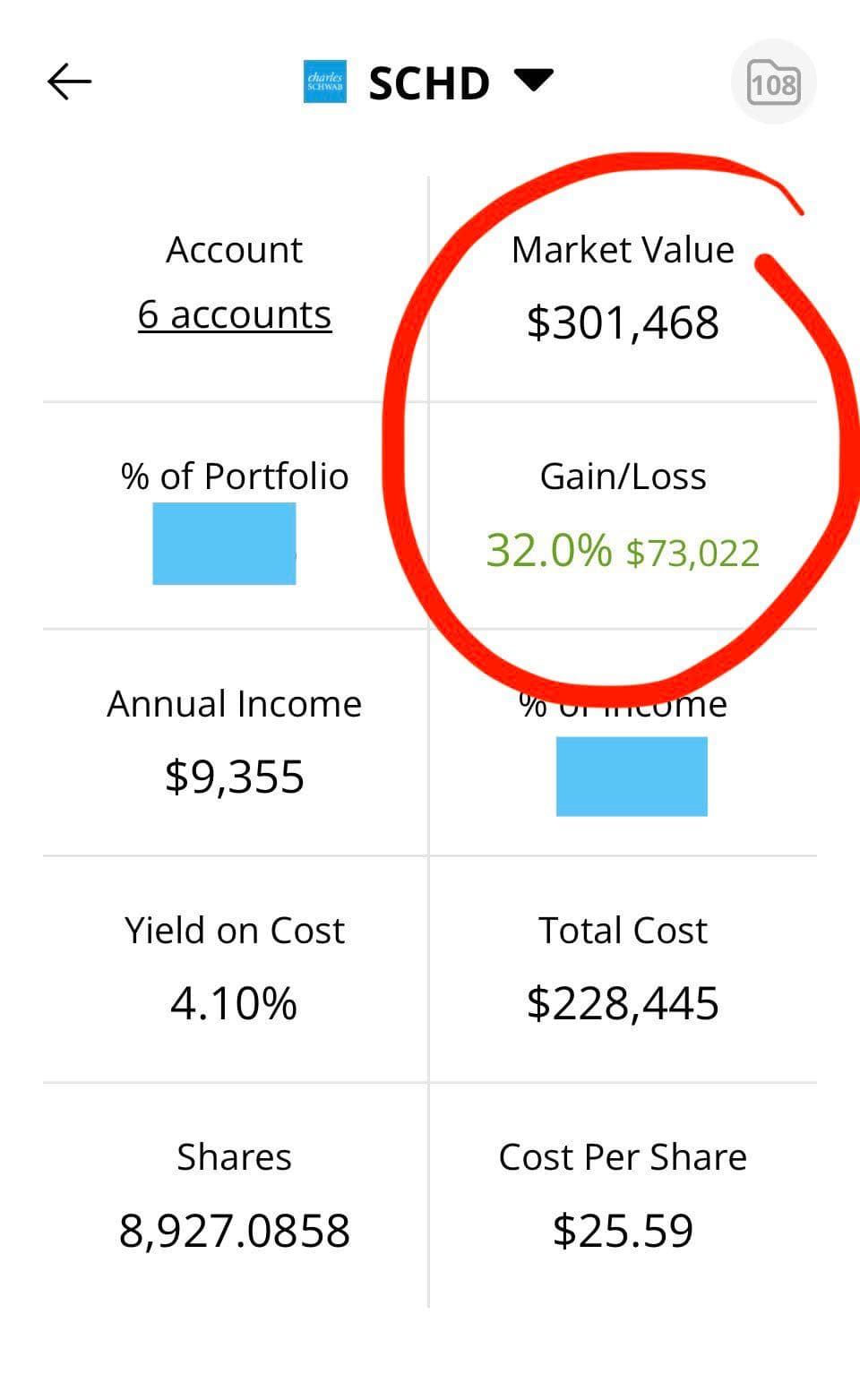
8,927 shares strong. Every penny above $33.60 puts the position north of $300K. Years of consistent buying, reinvesting every dividend, and staying disciplined through every market cycle. The journey is far from over folks. 💪 How many $SCHD shares are you holding right now?
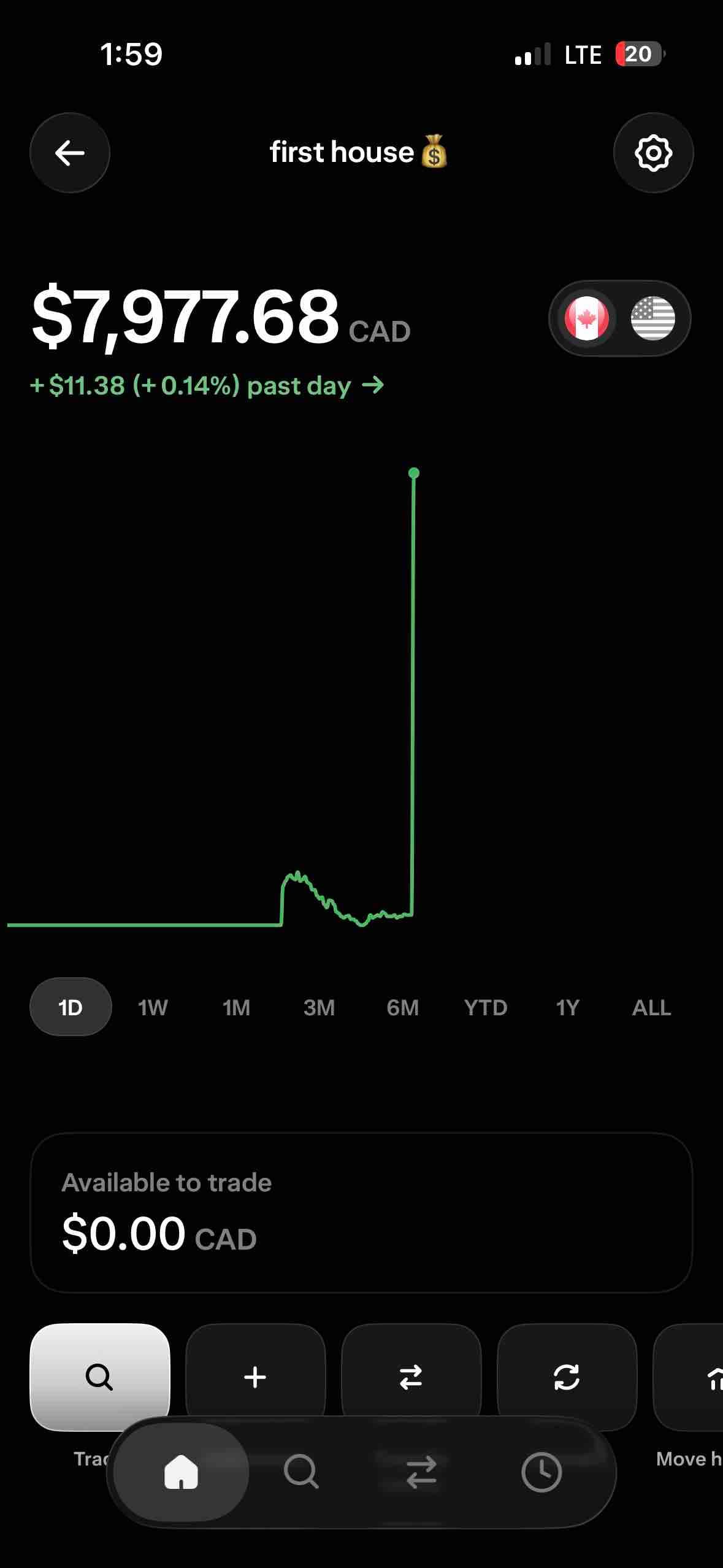
what does my first home plan look like! this is the best case scenario of what i want my future to look like in terms of purchasing a home! currently im investing 100% of my FHSA into XEQT and contributing $8,000 every year for 5 years until i hit the $40,000 limit. as of right now, my FHSA is worth $7,968.16. im going to continue to contribute $225 a week until september, then dropping to about $100 a week until april while im in school! i currently have $16,000 of room for this year because i opened it last year and contributed nothing, so the value of it right now has been since midway february. that’s when i started contributing to this account! every summer ill increase my contributions along with my income to make sure i max out my FHSA ASAP, obviously AFTER my TFSA is maxed first. so now what? if we use a 9% average annual return that $XEQT has proven since its inception here’s what my FHSA could look like by the time i want to buy my first home around age 30! Age 21: $7,967 Age 22: $18,200 Age 23: $28,900 Age 24: $40,600 Age 25: $53,500 (final $8k) Age 26: $58,300 Age 27: $63,500 Age 28: $69,200 Age 29: $75,400 Age 30: $82,200 if everything goes according to plan ill have over $80,000 to put towards my first home🤯. but honestly i believe it will closer to $100,000 based on these last few years so im very optimistic! i plan to live at home all this time, my parents (especially my mom) are very okay with it! once i start working full time it’ll be a matter of weeks before i max this out! read more
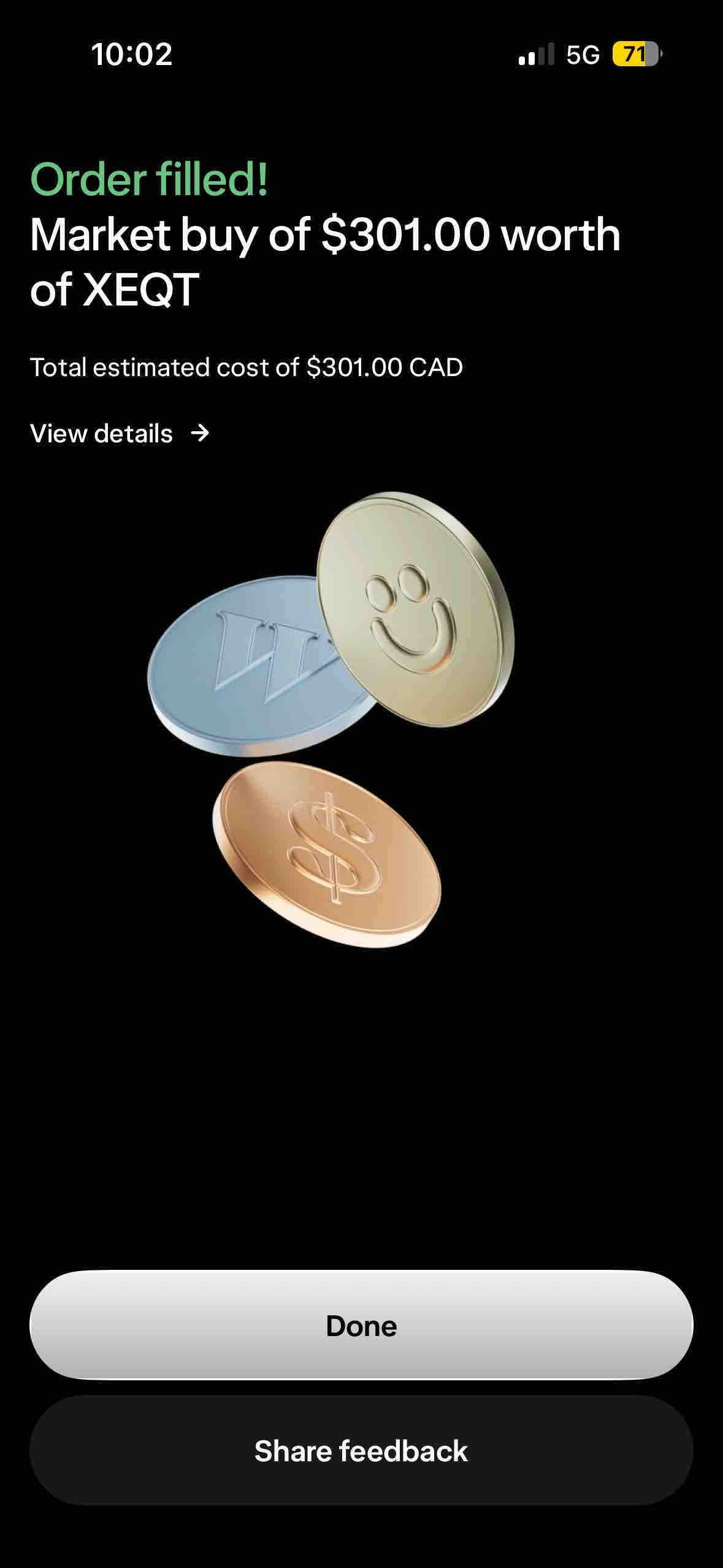
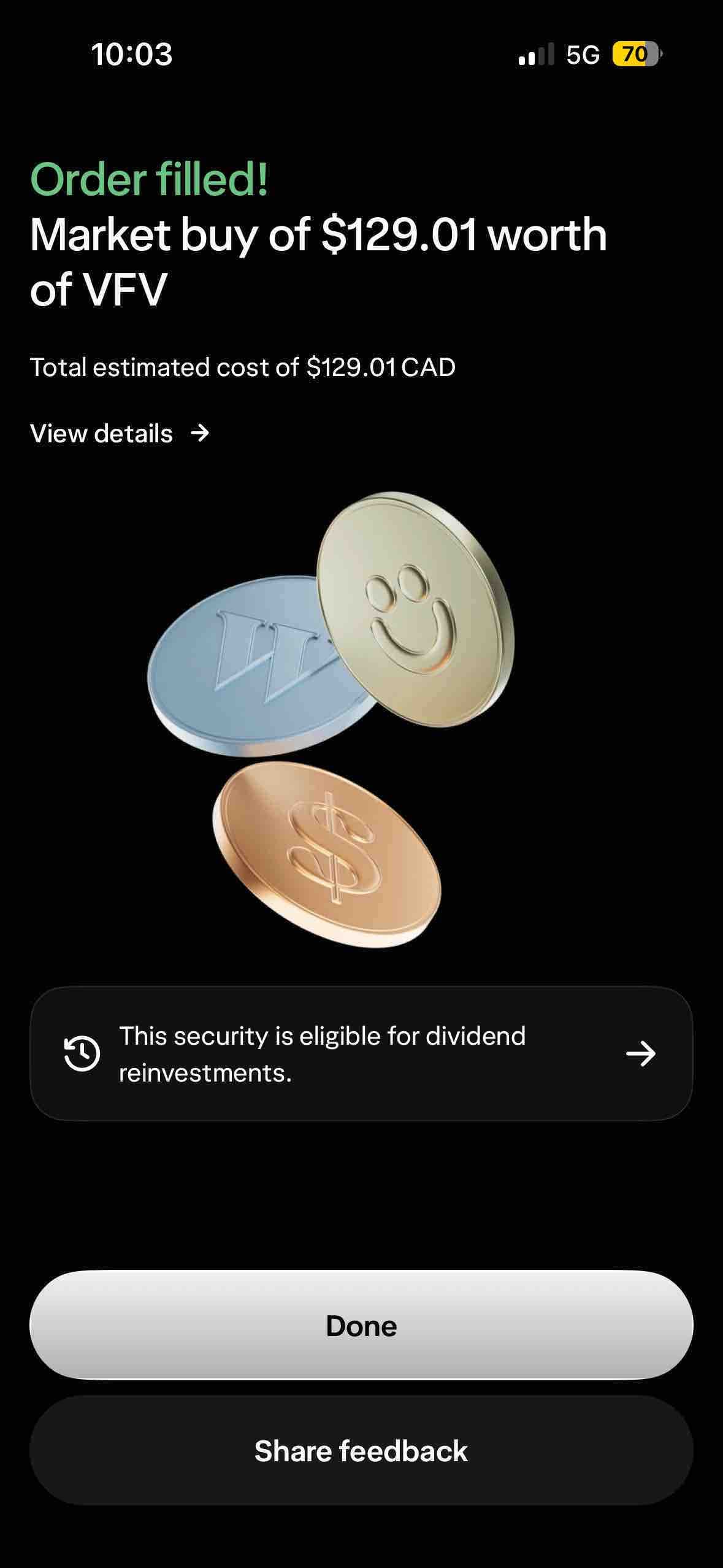
good morning everyone today is a good day because we get to deposit!! my favourite day of the week is investing day. so i’ll be depositing my weekly $325 + some extra income… see below! i was happily paid out from a side job this saturday when i went to a clients house to cut their lawn 🍃 🌳. i cut their lawn and received a nice check for $100!! but invested an extra $5 because why not! might as well make it an even $430 instead of $425 lol! again, i’m still doing my 70/30 split between my FHSA and RRSP for any deposit! so… i bought: $301 - $XEQT (FHSA) $129 - $VFV (RRSP) let’s have a good monday at work even though it sucks to go back! let’s enjoy the day! read more
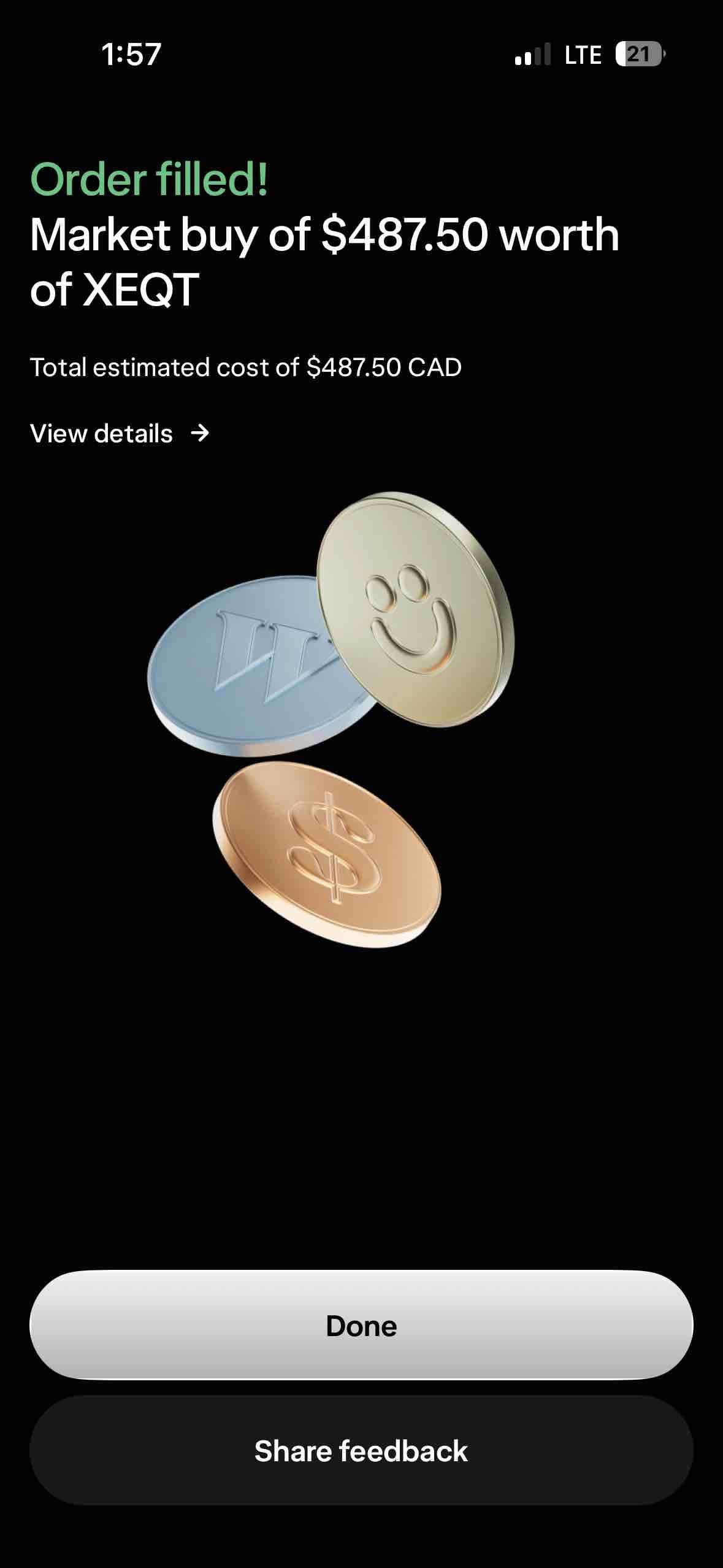
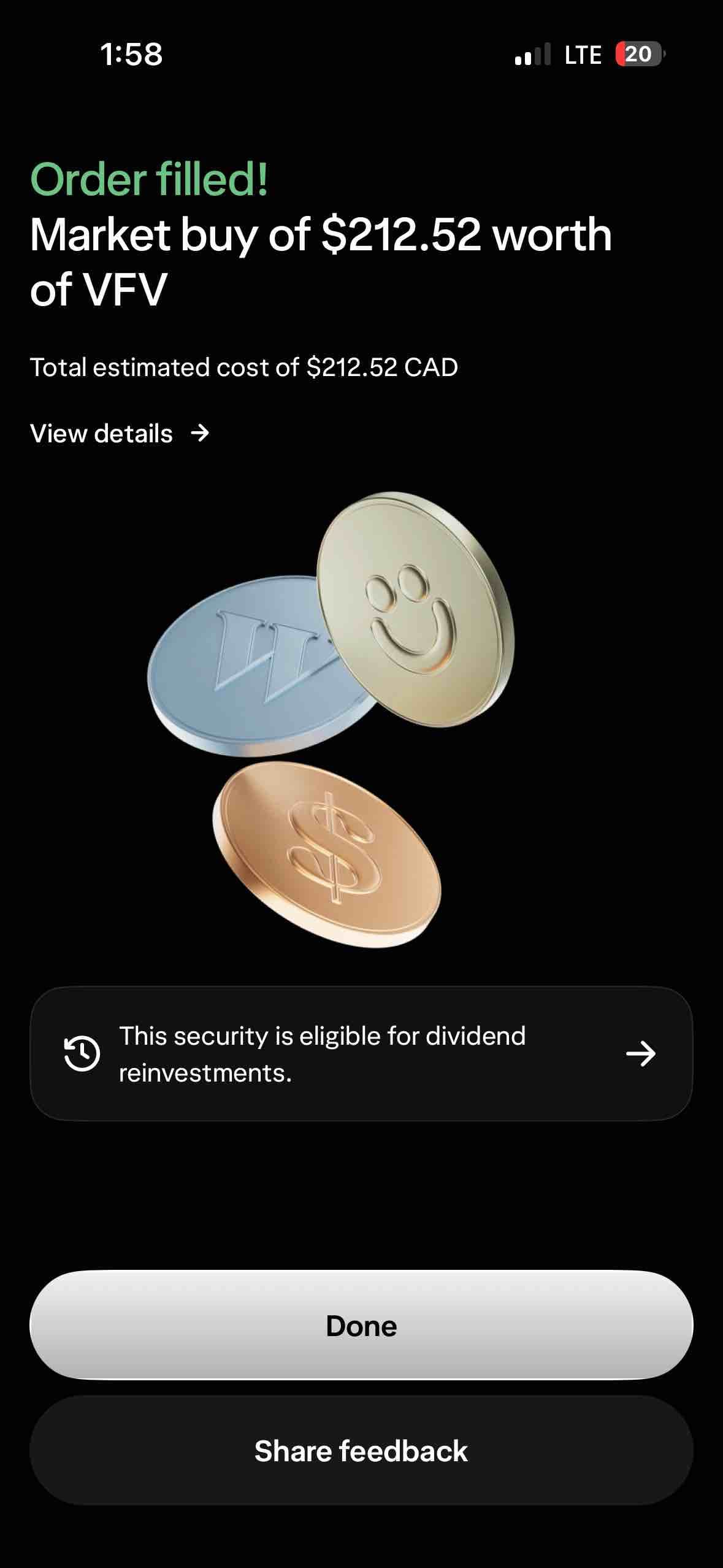
good morning everyone!! it’s another wonderful day at work!! i’m so happy to be alive and able to work and make money! last week was so insane i made so much money and i’ve been planning since last week on how to deploy it this week! so here’s my plan: first, i will invest my weekly $325: $225 - $XEQT (FHSA) $100 - $VFV (RRSP) next, i made $750 from a side job!! i know right it’s crazy but the cheque hit yesterday🔥💵 so i will be investing HALF of it and saving the other half as i have to pay my YEARLY insurance for my truck that comes out to $1519 for the year. (down $400 from last year thank god lol) so i’ll be buy another $375 worth of stock since i do a 70/30 split between FHSA/RRSP respectively i’ll be buying: $XEQT - $262.50 (FHSA) $VFV - $112.50 (RRSP) so the TOTALS for today will be $487.50 to $XEQT in the FHSA $212.50 to $VFV in the RRSP! happy investing, let’s go let’s keep getting richhhhh💰 read more