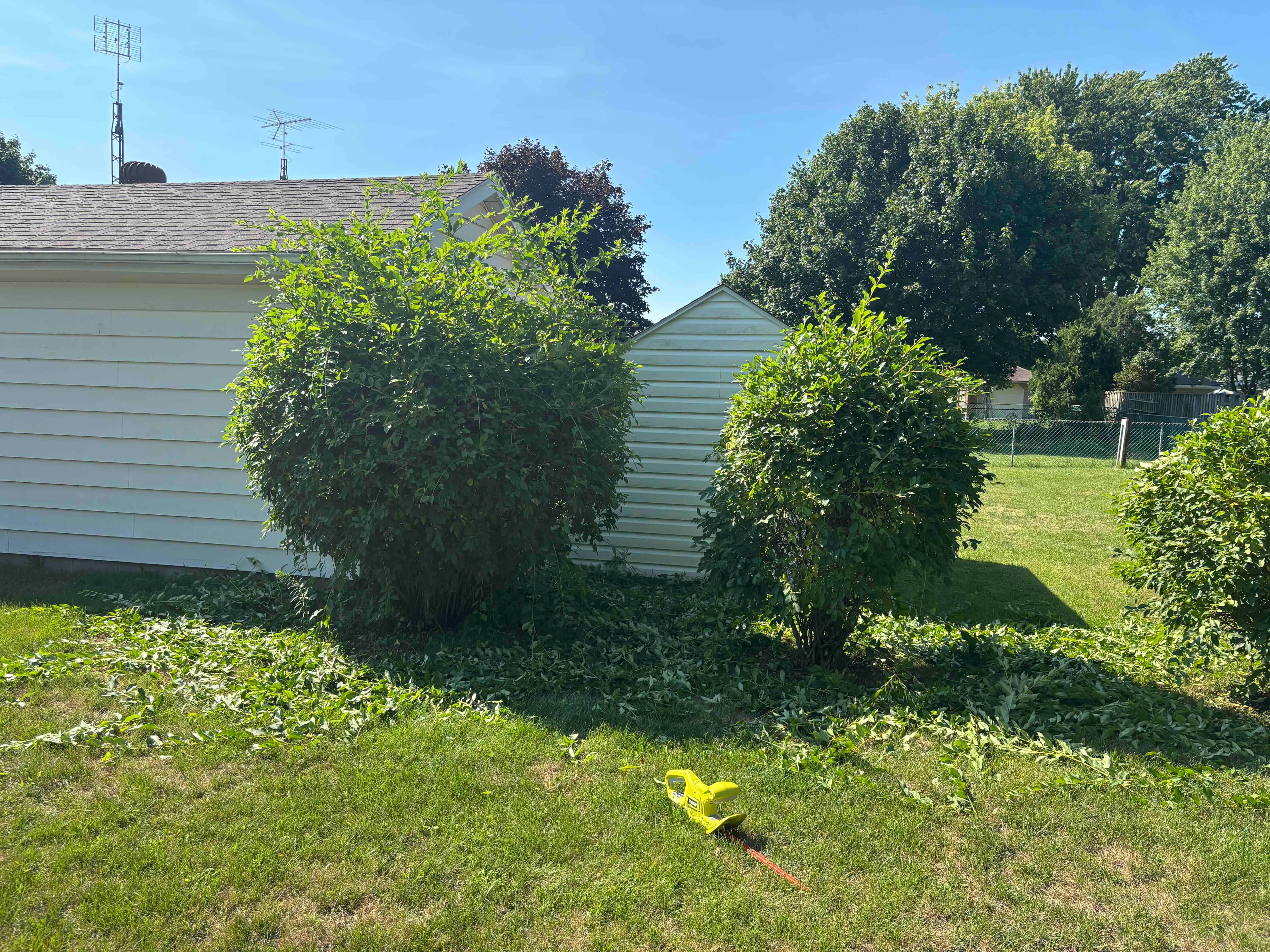
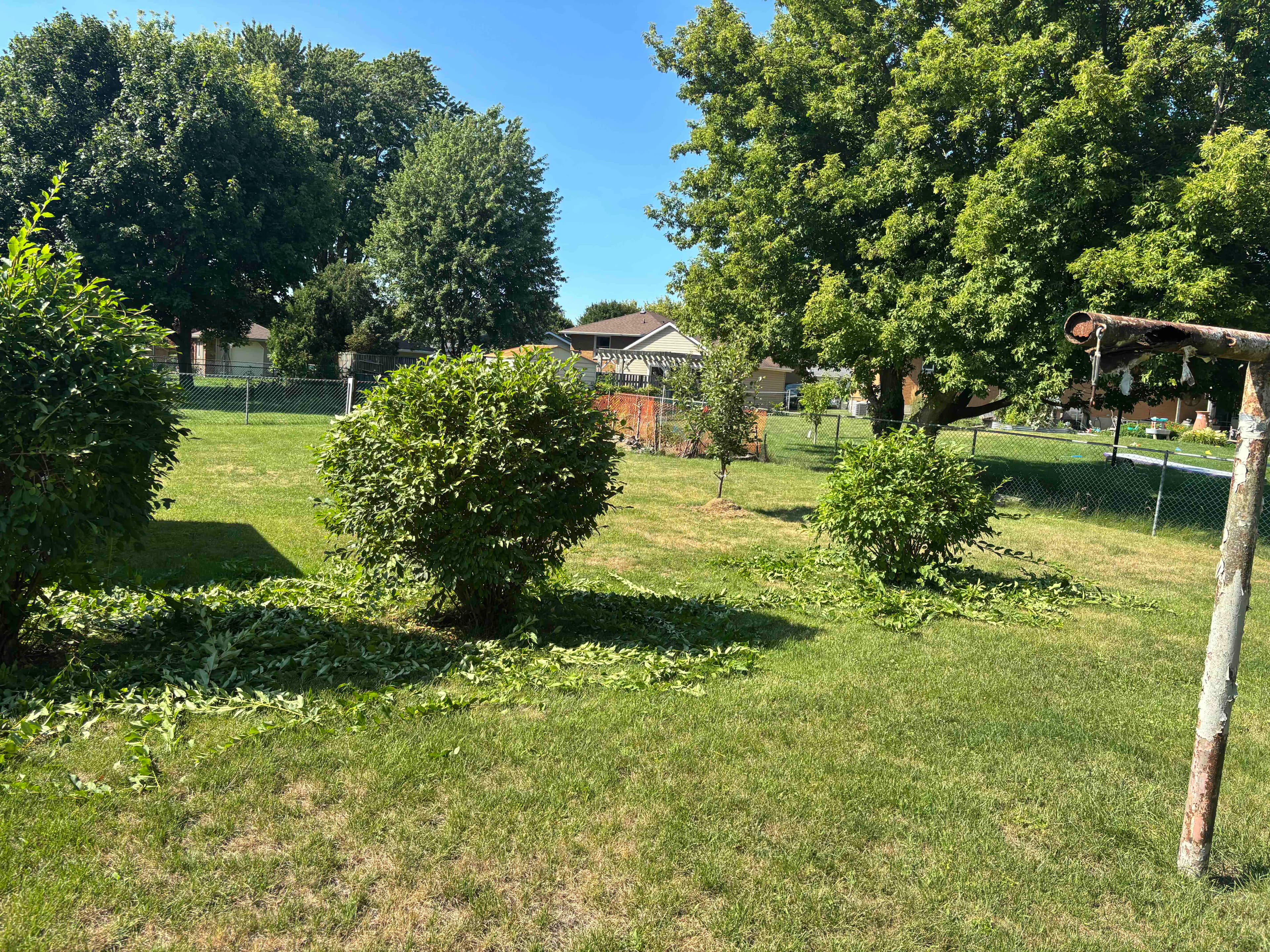
working my 7:00-4:30 job everyday is one thing, but what does it take/look like when i’m at my side jobs! i’ll usually go after work to get any custom work done that a customer would like! this an example of what one looked like last week! i was shaping up some hedges/trees for a customer, they requested it to be just to be more contained! this is a few pics of the job part way done i was at this place for 45 minutes and made out with $60 and i funnelled that right into $XEQT and $VFV. this is just one example and a quick job i did that was fun and that i wanted to share. this is how i increase my income outside of my regular job, if anyone has any questions about this just DM me or put it down in the comments! thanks for being here😊👏🏼read more
15 dividend increases so far, with $CWEN the latest addition at +1.6%. Also tracking the cuts and $SWKS dividend suspension. Full Q3 dividend estimate coming next week. Anyone looking forward to it?
You just got paid $100. Do you spend it, or do you hire a new employee to work for you forever? That is exactly what happens when you turn on a DRIP (Dividend Reinvestment Plan). Instead of taking your dividend payouts as cash, you use them to buy more shares of the company. Those new shares pay their own dividends. It is a perpetual motion machine for your portfolio. But don't take my word for it—look at the math. Let’s say you invest $10,000 into a stock that pays a 4% dividend yield, and the stock price grows 3% per year. Here is the difference over 20 years: · Without Reinvesting (Taking the cash): You collect 18,000. Total value: ~$26,000. 💸 · With Reinvesting (DRIP turned ON): You buy more shares each quarter. Your investment grows to ~$34,500. That is $8,500 extra for doing absolutely nothing except flipping a switch. No stress, no timing the market, just compounding working its magic. The best time to start a DRIP was yesterday. The second best time is now. Turn the snowball on. Let them help you grow your portfolio Let me know if you use DRIP or just take the cash $HDIV$JEPQ$XDIV$ENB$XEI$BANKread more
I’m 30 years old and an immigrant from the Philippines, currently working in Canada as a temporary foreign worker. I’ve been working here for the past two years. I started my investment journey in October 2025. I began with a BMO TFSA, then explored Fidelity and eventually moved to Wealthsimple as I learned more about investing and became more comfortable managing my money. One of the biggest moments in my investing journey was experiencing my first major market dip. The market downturn in April 2026, driven by rising tensions surrounding the Iran–US–Israel conflict, was a completely new experience for me. I remember feeling very anxious and worried as I watched my investments drop. It was my first real experience of seeing the market decline, and it made me question whether I was making the right decisions with my money. Looking back, though, I realize that experiencing that dip was an important part of my journey as a new investor. It taught me that investing isn’t just about numbers and returns—it’s also about learning how to manage your emotions when the market doesn’t go the way you expect.
Are you making the mistake of focusing too much on dividend yield? I recently sat down with Chris D’Agnes from Hamlin Capital Management for an educational conversation about one of our favorite topics: the power of dividend growth investing. A high dividend yield can certainly be attractive, but there's another number dividend investors should pay close attention to: how quickly that dividend is growing. In this interview, Chris and I discuss: Why dividend growth can be so powerful over long periods The impact of compounding dividend increases Why chasing the highest yield can sometimes be a mistake How to identify companies capable of growing their dividends Why this strategy can be especially interesting for long-term and retirement investors Check out the full interview and let me know what you think! https://youtu.be/ERS_aA66BcAread more
🎉 $100,000 Portfolio Milestone! 🎉 I finally reached $100K in my investment portfolio! 🥹📈 My journey started in April 2022, when I was still studying. I didn’t have a huge income or a perfect investment strategy. I simply started by saving money, cutting unnecessary expenses, and investing whatever I could. I still remember my first-ever monthly dividend: $19.52. At the time, it felt like such a small amount, but it was the beginning of something much bigger. Fast forward to today… my portfolio generates around $1,100/month in dividends. 💰 My goal isn’t just to build wealth for the sake of having a big number. I’m building this portfolio with a purpose — financial freedom and eventually helping fund a future home purchase. 🏡 I’ve definitely made a few mistakes along the way. Some investments worked out, some didn’t, and I’ve changed my strategy many times as I learned more. But I’m actually grateful for those mistakes because they taught me lessons that no book could. Looking back at where I started in 2022, I’m really happy with the progress. ❤️ $19.52/month → ~$1,100/month $0 → $100,000 portfolio The next goal? $250K. Then $500K. Then $1M. 🚀 Still a long way to go, but I’m enjoying the journey. One dollar, one dividend, and one investment at a time. Here’s to the next chapter! 🥂📈 #Investing #DividendInvesting #100KPortfolio #FinancialFreedom #PersonalFinance #WealthBuilding #InvestingJourneyread more
I have an account with Td easy trade, they still havent deposit the distribution ( it should be on the 6th) my rbc and other account has always been on time. Is this normal?
Well, finally joined the FTS club! In 2024-2025 I chose CPX over FTS, which worked out… a bit better but not really significant. Looking a bit closer, although both are in Utilities they are significantly different. One more of transmission, one generation. So I can have both without much of any overlap. So I thought it was time to get into FTS, in this downturn. Both fit my “growth and dividend” basic approach
📌 ETFs Covered in This Video: 🇨🇦 Canadian Income ETFs: • Vanguard FTSE Canadian High Dividend Yield ETF (VDY) • iShares S&P/TSX Composite High Dividend Index ETF (XEI) • Hamilton Canadian Bank Equal Weight ETF (HBNK) • Hamilton Enhanced Multi-Sector Covered Call ETF (HLIF) 🇺🇸 U.S. Dividend & Income ETFs: • Schwab U.S. Dividend Equity ETF (SCHD) • Vanguard High Dividend Yield ETF (VYM) • Vanguard Real Estate ETF (VNQ) • Vanguard Utilities ETF (VPU) • NEOS S&P 500 High Income ETF (SPYI) 🌍 International Dividend ETFs: • BMO International Dividend ETF (ZDI) • Vanguard International High Dividend Yield ETF (VIDY) https://www.youtube.com/watch?v=2epV9Ecad-Eread more
$O dropped from it's all year high to about $61.85.... great dividend yield a huge business line with 97% occupation! would you buy back in? or staying away? I owned it for two years, made about 20% + return, so was great, but when it went so high thought selling was due. long term thoughts? read more
Just topped up my $DIVO position. Apparently my portfolio and I have the same love language: “more monthly cash💰, please.” 😂 DIVO said “hold my beer” and I said “hold my buy button.” Cheers to another round of dividends rolling in. 🥂
May — $739.28 June —$751.98 July — $776.23 August — $758.56 so far And with the second CANY payment of $41.54, August will reach $800.10 CAD 🎉 $800/month = ~$9,600/year in portfolio distributions on my TFSA income portfolio currently valued at $57,200. Every distribution is being reinvested. 🔄 Next milestone: $1,000/month. 🚀read more
Dividend Vision allows you to check your dividend safety score , risk of portfolio , make projections and search every stock and ETF . Keep a eye on stocks and ETF on your watchlist or upload your portfolio to keep track of performance Being on the Board of Advisors I will give you a free 7 day trial to check it out www.dividendvision.com/?via=theedgereport
Averaging down might be the most expensive habit in dividend investing, and it always feels like the disciplined choice at the time. Sometimes it is. Buying more of a good business at a lower price is the whole point. Sometimes you are buying more of a business whose numbers get worse every quarter, and a small mistake compounds into a large one. The tell is whether the thing that made you buy in the first place is still true. Telus is the clean example. Growth target trimmed in May 2025. Growth paused in December 2025. Dividend cut 55% in July 2026. Each step was cheaper than the last, and each step was also a worse business than the last. Put together a free report on the rules that separate the two: https://www.dividendstocksrock.com/telus Do you have a written rule that stops you averaging down, or do you decide case by case?read more
A dividend can only be reinvested once. Unless you route it the right way first. If you hold dividend-paying stocks in a regular taxable account, most people just set the dividends to auto-reinvest. Cash comes in, buys more shares, done. Nothing wrong with that at all. But if you happen to be running the Smith Manoeuvre, there's a better path for that same cash. Quick version of the strategy for anyone who hasn't seen it: it slowly turns your regular mortgage, where the interest is not tax deductible, into an investment loan, where it is. You use a readvanceable mortgage, which just means a line of credit that grows as you pay the mortgage down. You borrow that room and invest it. This is not new debt. You're converting a balance you already owe into a form the tax rules let you deduct. Now the dividend part. Instead of letting it auto-buy more shares, take the dividend in cash. Use it to make an extra payment against your non-deductible mortgage. That frees up the exact same amount of room on your line of credit. Borrow it back, invest it. Same dividend, two jobs: it shrank the bad debt on the way through, and it still ended up invested. Quick Ontario example. A $600000 mortgage, a portfolio around $40000 paying 4 percent. That's about $1600 a year in dividends. Reinvested straight, it just buys shares. Routed through the mortgage first, that same $1600 knocks down non-deductible principal, converts a little more of your mortgage to deductible, then buys the shares anyway. And the tax doesn't change. A dividend is taxed in the year you receive it either way, cash or reinvested. So doing it this way costs you nothing extra at tax time. You're just making the money work twice. The honest part. This only works if you're set up properly, with a separate account that keeps the borrowed money completely apart from your personal cash. The CRA wants a clean, traceable line from the borrowed dollar to the investment. Let personal money mix in and you can lose the deduction. And the real risk isn't the debt, it's that the converted balance is invested now, so the market can drop while you still owe it. On a small portfolio this barely moves the needle. It only starts to matter once the dividends get big enough to notice. Not investment/tax advise. talk to professional regarding your unique circumstance.read more