Borrowing Against Your Portfolio: What’s “Safe”? 💳
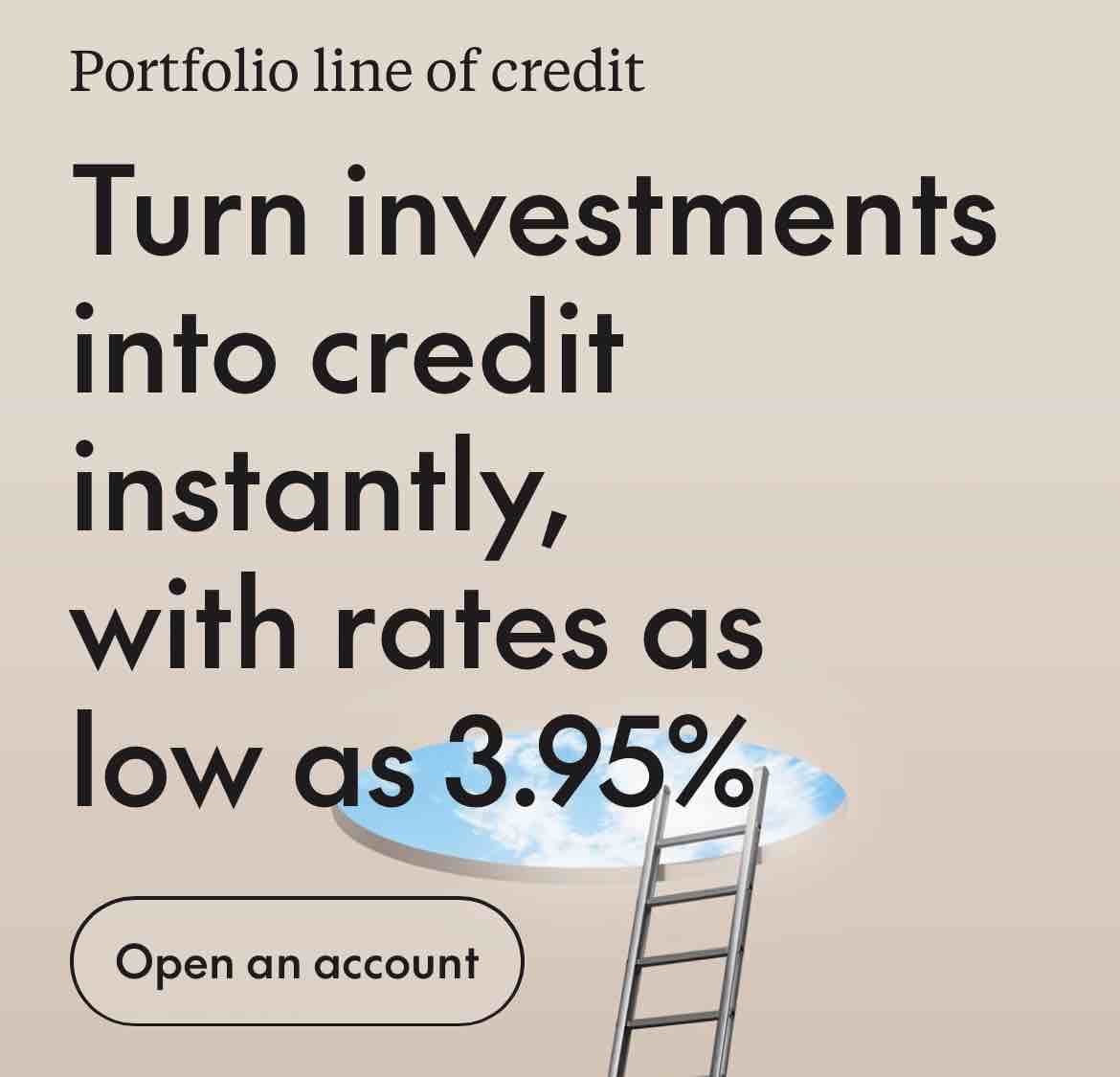
If you’re in Canada and thinking about using Wealthsimple’s Portfolio Line of Credit (PLOC), the key question isn’t “What has the highest return?” but “What can I hold without panicking if markets drop while I owe money?” Wealthsimple’s docs say you can borrow up to 35% of your investment value, at around prime ± 0.5% (roughly 3.95–4.95% recently), and your limit moves with the market. If your collateral falls too far, they can sell positions to restore the account. That’s why “safe” here really means low volatility, not “popular ETF.” 👉Where $XEQT Fits 📈 • XEQT is a globally diversified, all‑equity ETF with a medium risk rating and MER around 0.20%. • It’s safer than betting on a handful of single stocks, but BlackRock and multiple reviews are clear: it holds no bonds, can decline sharply, and is designed for long‑term growth, not short‑term stability. So: ✔ Great for 10–20+ years of unleveraged investing. ✖ Not great as the main asset backing a loan you might need to repay during a downturn. 💸Safer Options If You’re Borrowing 🛡 If you actually draw on a PLOC and want to keep risk low, safer categories are: 1. Cash-like / HISA ETFs • Aim to track cash or very short‑term deposits. • Price movement is minimal; the main risk is interest rate changes on yields. • Example tickers: Canadian HISA ETFs such as $CASH or $PSA. 2. Short-term bond ETFs • Hold government and high‑quality corporate bonds with near‑term maturities. • Less sensitive to rate changes than long bonds, and much less volatile than stocks. • Example: short‑term bond ETFs like $VSB 3. Balanced ETFs (stocks + bonds) • If you still want growth, a 40/60 or 60/40 balanced ETF is materially calmer than 100% equities. • These mix stocks with bonds, reducing drawdowns compared to all‑equity funds like $XEQT or $VEQT. Core idea: the more stocks you hold, the bumpier the ride. When debt is involved, that bumpiness can trigger margin calls at the worst possible time. 😃Simple PLOC Rules ✅ If you’re borrowing against a portfolio: • Keep your loan‑to‑value low. If Wealthsimple allows 35%, staying closer to 10–20% gives you more cushion. • Match the risk of the asset to the risk of the debt. The shorter and more certain your need, the more cash‑like your investment should be. • Avoid using a PLOC to chase hot themes or speculative names. Leverage magnifies both gains and losses. Bottom Line $XEQT is safer than picking random stocks, but it is still a stock fund first, safety net second. When there’s debt on the table, safety means lower‑volatility assets: cash‑like ETFs (CASH, PSA), short‑term bonds (VSB), or conservative balanced ETFs. The goal with a portfolio line of credit is simple: Don’t let your investments and your loan punch you in the face at the same time. 💥
1,988 views
6 Comments
Vargasaaaa @Sarahaaaaaaa · 20dEdited
I borrowed 25% of the value of my TFSA and non reg last week using the Ploc and bought $XEQT You’re right, it’s more about borrowing an amount you’re comfortable with, but what you buy is also important I wouldn’t have felt comfortable buying something with higher volatility or less track record
Erina @Erina · 19d
If you have just cash in your account, you can borrow upto 50%. lol... That's what Wealthsimple says...
Brown Kare@Veronicaaaaa · 20d
Great post — fully with you on keeping LTV low! The cash-like collateral part I can't square though. The loan is capped below the asset, so the asset always wins: $10k of $CASH only unlocks $3.5k, and if I need more I'm selling regardless. If I need less, selling was already free — no embedded gain to defer. Meanwhile the borrow costs ~4% against a ~2.4% yield. The pitch is liquidity without selling — but that only pays off when selling actually costs you something. With $CASH it doesn't. 🤔 Or am I missing an angle?
See the full comment section 👀Sign up for the full Blossom experience!