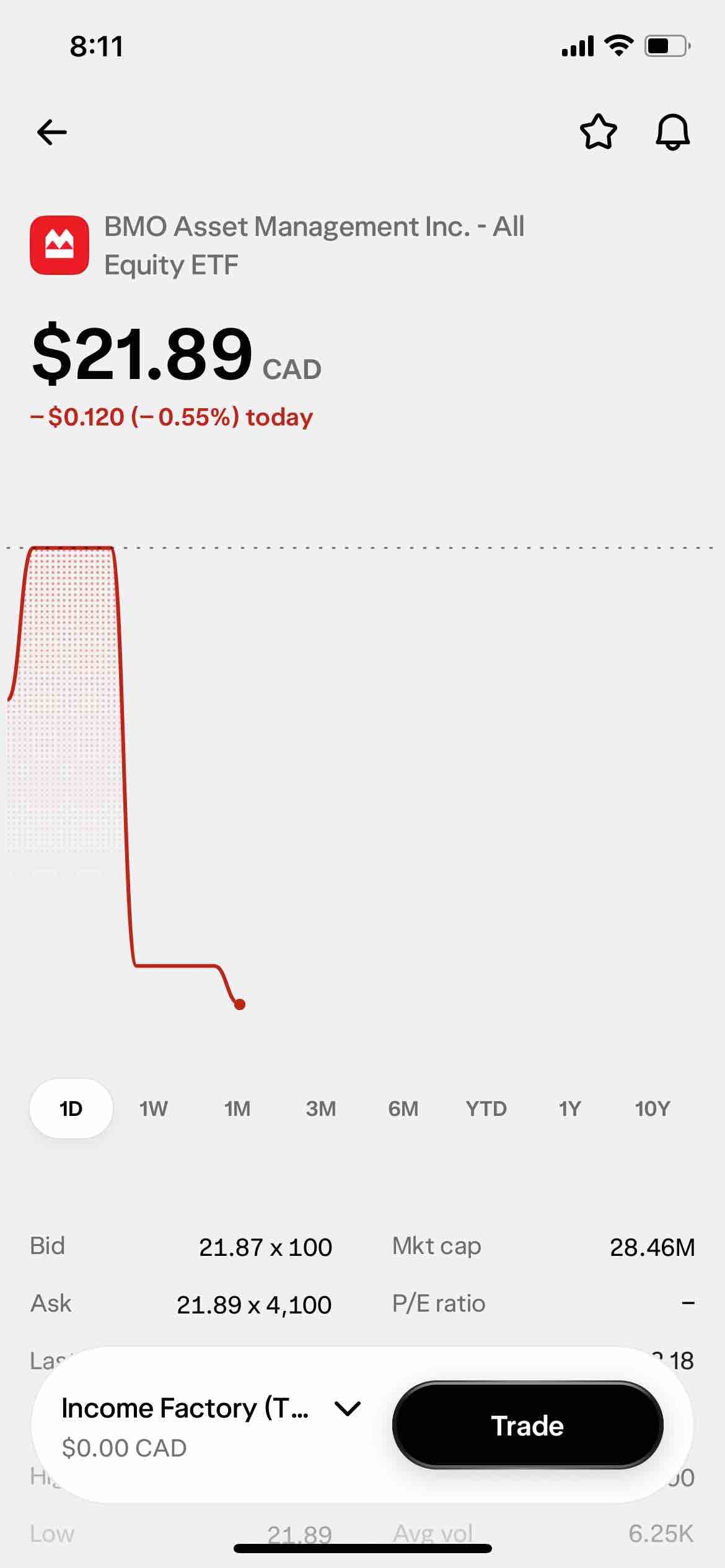
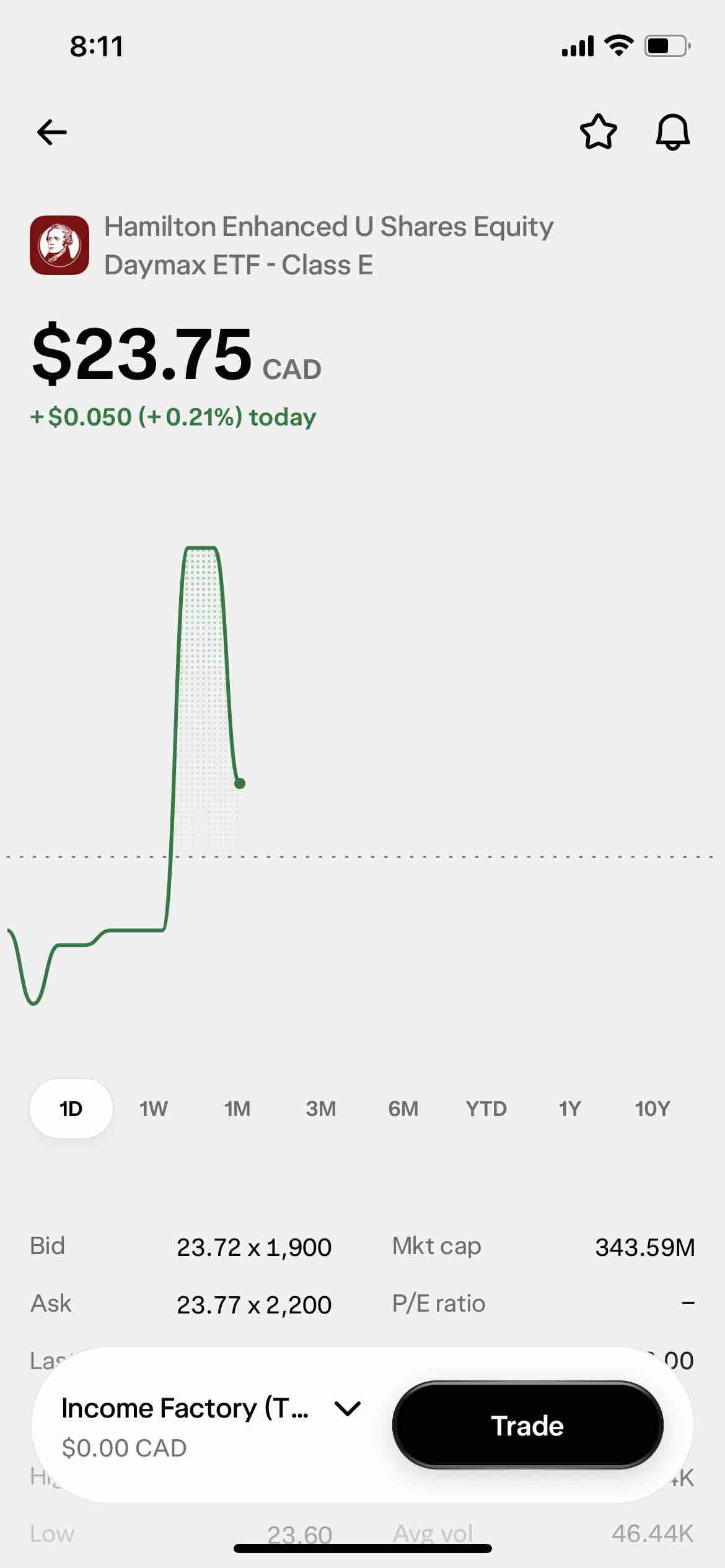
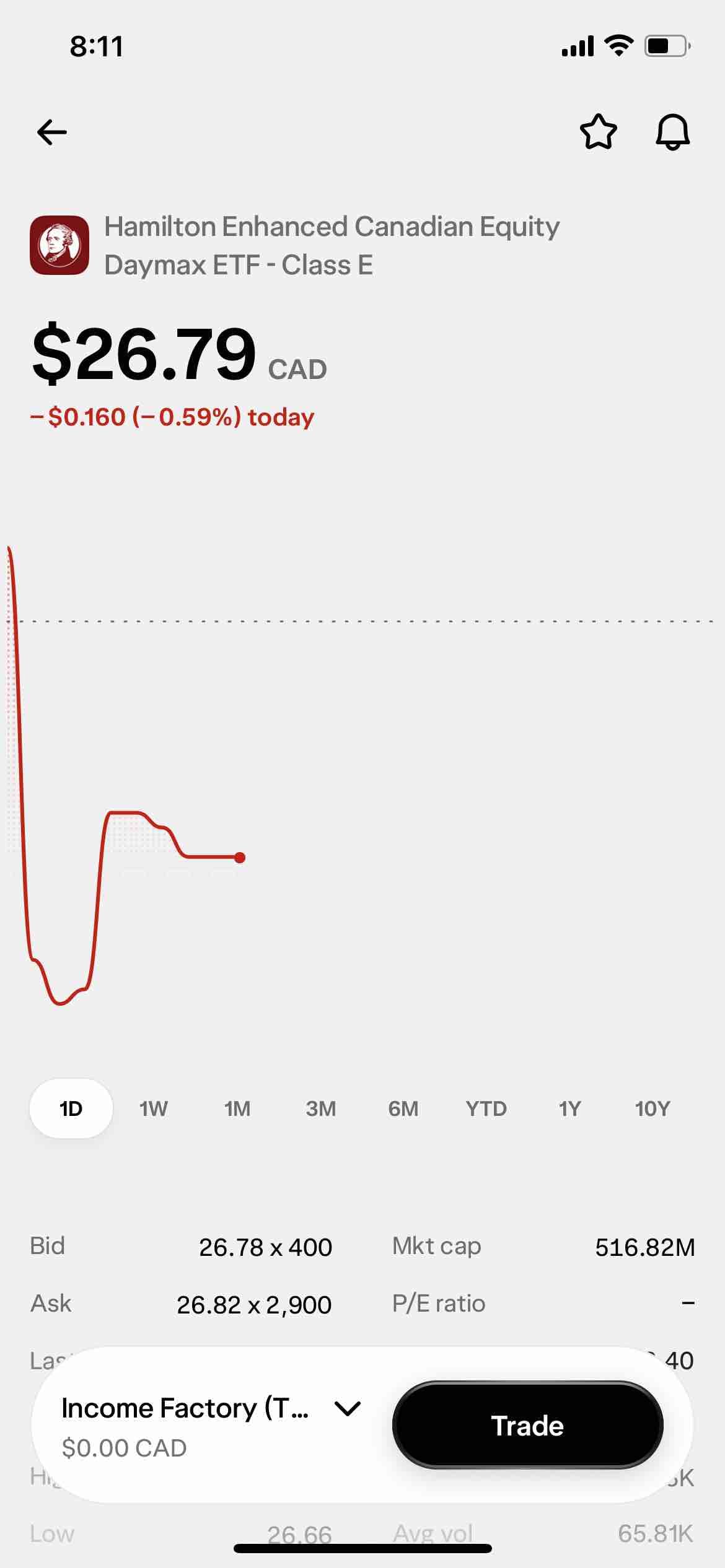
🔒Ex-date Tuesday💰Paydate Wednesday $WPAY is now $TOPW since couple of months $TOPW$0.238142⬆️ Last week : $TOPW$0.230055⬆️ 2 weeks ago : $TOPW$0.219827⬇️ 3 weeks ago : $TOPW$0.249134⬆️ 4 weeks ago : $TOPW$0.187370⬇️ 5 weeks ago : $TOPW$0.203850⬇️ 6 weeks ago : $TOPW$0.293120⬆️ 7 weeks ago : $TOPW$0.228021⬆️ 8 weeks ago : $TOPW$0.207141⬇️ 9 weeks ago : $TOPW$0.231020⬇️ 10 weeks ago : $TOPW$0.309598⬆️ read more
I’m 55… can I really retire with income ETFs? 👀 In my newest video, I’m breaking down my retirement plan, my hybrid income + growth strategy, and the ETFs I’m using to try to generate retirement income. $OVL $TDAQ $GPIQ $QQQI $XQQI I also share my current income numbers, the risks I see, and why I’m considering retiring sooner rather than later. 🎥 Watch the full video: https://youtu.be/x8tcPYJqQyw?si=trajPQhm4v1M2X8U Would you rather build retirement around income, growth, or both? ⚠️ Not financial advice. Just sharing my personal investing journey.read more
💰 FREE money → REAL growth! My TFSA growth portfolio just hit $12,166, built ONLY from distributions in my main TFSA. New positions, big gains, and massive share accumulation this month. Watch the full update 👇 🎥 https://youtu.be/eyiA7SJwxXg 📊 Follow my full portfolio on Blossom!read more
My investing story has was supposed to just happen on a well-groomed, lit, easy highway, however, Just like life, I had to swerve or run over road kill, yell at my portfolio for not doing what I thought it should be (drivers), hit potholes, decided that the best and fastest route was this other alternate road, which was slow, long windy and brought me closer to my starting point then my destination. I had to pull over, take a nap, reassess what I was doing and start from scratch. With renewed focus and taking the time to understand what I was truly trying to achieve, I'm well on my way now with my goal to retire and spend my remaining time on this earth, choosing to do what I want to do. Kids, travel, volunteer, etc. In 2012, I was given good advice from a very wise investor; stick with Canadian banks, they are tried, tested and true. I was told to be boring and I would get there. I chose to go the other way, bought volatile positions that went bankrupt or to this day are pretty much worthless (these are my roadkill, potholes and terrible drivers - to be fair - we are all terrible drivers at least at some point, most don't want to self-assess. In 2016, I started over, refocus my strategy and bought the safe positions, banks and utilities, things were going somewhat ok but still to 'slow' for my goals so... In 2021, I pulled my entire portfolio, which was just over 100k and got into the rental business - still in this btw. I realized that while this is a good investment, there are a LOT of things I did not really comprehend until the bills started coming - a new deck, roof, property taxes, taxes, insurance, more taxes, and then more taxes. I haven't even talked about tenants, unpaid rent, etc. This is my 'the best and fastest route was this other alternate road, which was slow, long windy and brought me closer to my starting point then my destination' so... In 2022, still not happy with my investment growth, I did some research and decided to go with the CC ETF strategy. For me, I'm comfortable with this, I'll take the the return today instead of growth tomorrow. Not for everyone, I get it. Do your thing. This is my 'pull over, take a nap, reassess what I was doing and start from scratch.' My dividend returns: 2022 - $35.99 2023 - $458 2024 - $5,071 2025 - $17,564 2026 - $21,576 still have Oct, Nov and Dec so should push just north of $30,000 I don't plan on changing my strategy, I know there will be every driving scenario over there - I have no doubt at some point, I'll be calling a tow truck but I'm moving forward, I'll just need some help every now and again. I just crossed $3,200/mth in returns and a total portfolio of $240k. I'm reinvesting every dollar and at $10,000/mth, I'm shutting it down. Dec 2030 is my goal date. For me, the road less travelled is starting late but I tell people I speak with who aren't investing and want to, Day 1 is THE best day to start. There is is no 'too late'. read more
Hello everyone, I am back from vacation. Not that I've been on holidays for the past 4 weeks (I wish) but returned to school start week (very stressful) as well as lay offs at work (also very stressful) that got on the way of the weekly updates. Thus, this video review covers the period from Aug 24 to Sept 25. You'll see a bit more activity than usual. I Contributed $375. That covers the period from Aug 24 to Sept 25. No sales. Buys included: $HDIV , $HYLD , $HHII , $HHIS , $CCHI , $VA , $VE and $PAYI. The portfolio improved from +11.25% YTD → +12.91% YTD. That’s a +1.66 percentage point improvement. The bigger highlight for me was income. September distributions came in at $82.04 up from $75.91 in August. That’s an 8.08% month-over-month increase. What makes that even better is that $EASY reduced its distribution, yet the portfolio still produced another new monthly income high. Review period scorecard: 🟢 12 green ⚖️ 7 roughly flat 🔴 3 red For this episode’s Video Review Segment: 🟢 HPYE review — 9.0/10 — Recommend I liked that it explained how the income is actually generated and focused on total return rather than just yield. 🔴 HDIV review — 5.5/10 — Wouldn’t Recommend It raised some valid questions, but I felt too much of the analysis depended on estimates and hypothetical scenarios. For transparency, I own both $HPYE and $HDIV . Full breakdown, rankings, and macro story in the new video. 🔗 Watch Episode 34 now: https://youtu.be/L7P8KTKHELI Cheers, A. Still contributing. Still reinvesting. Still learning. Still building. read more
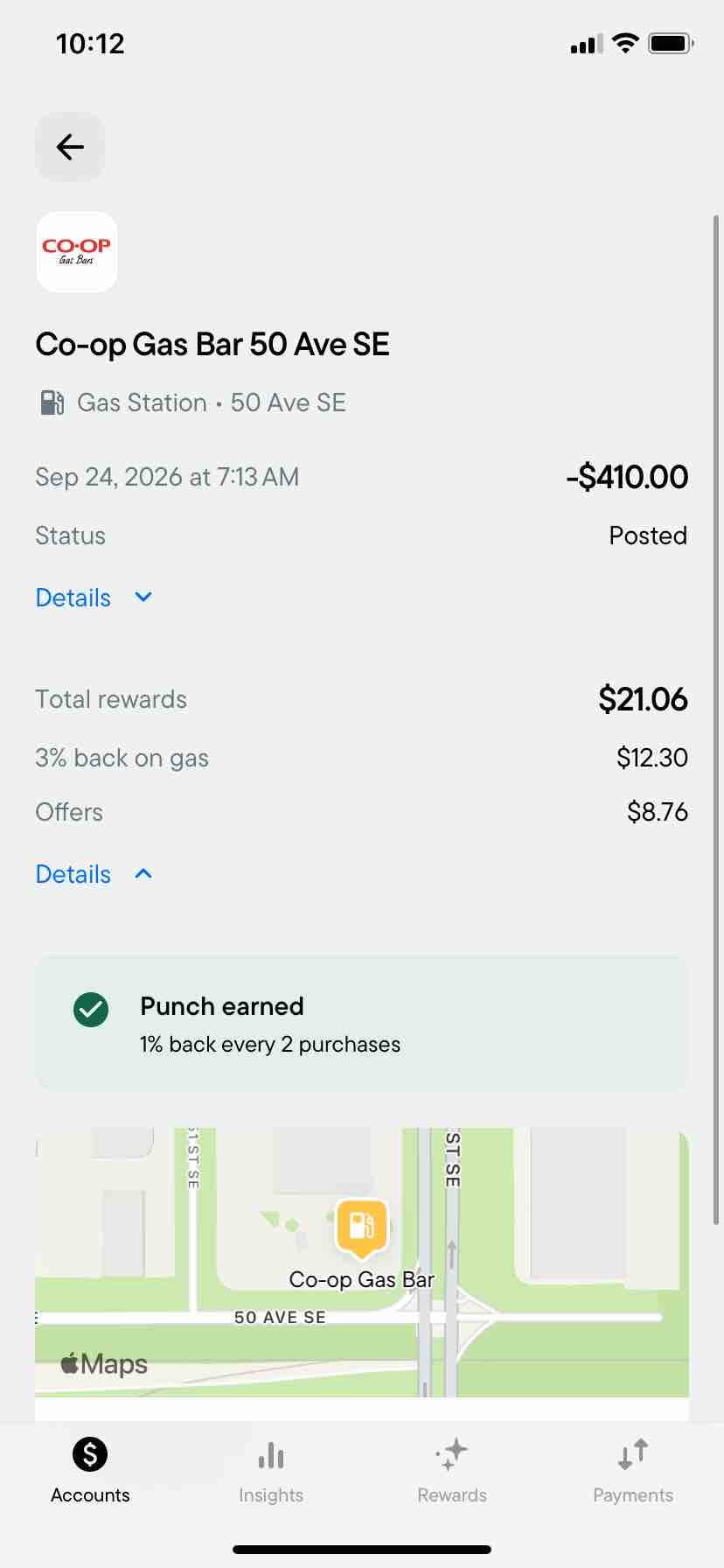
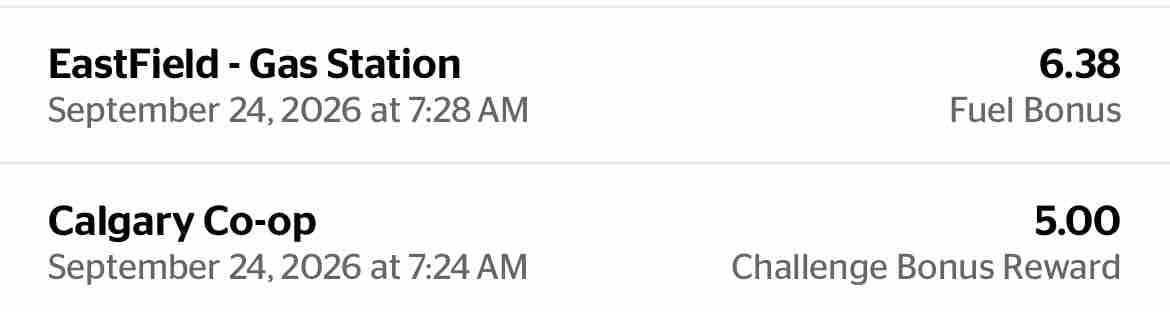
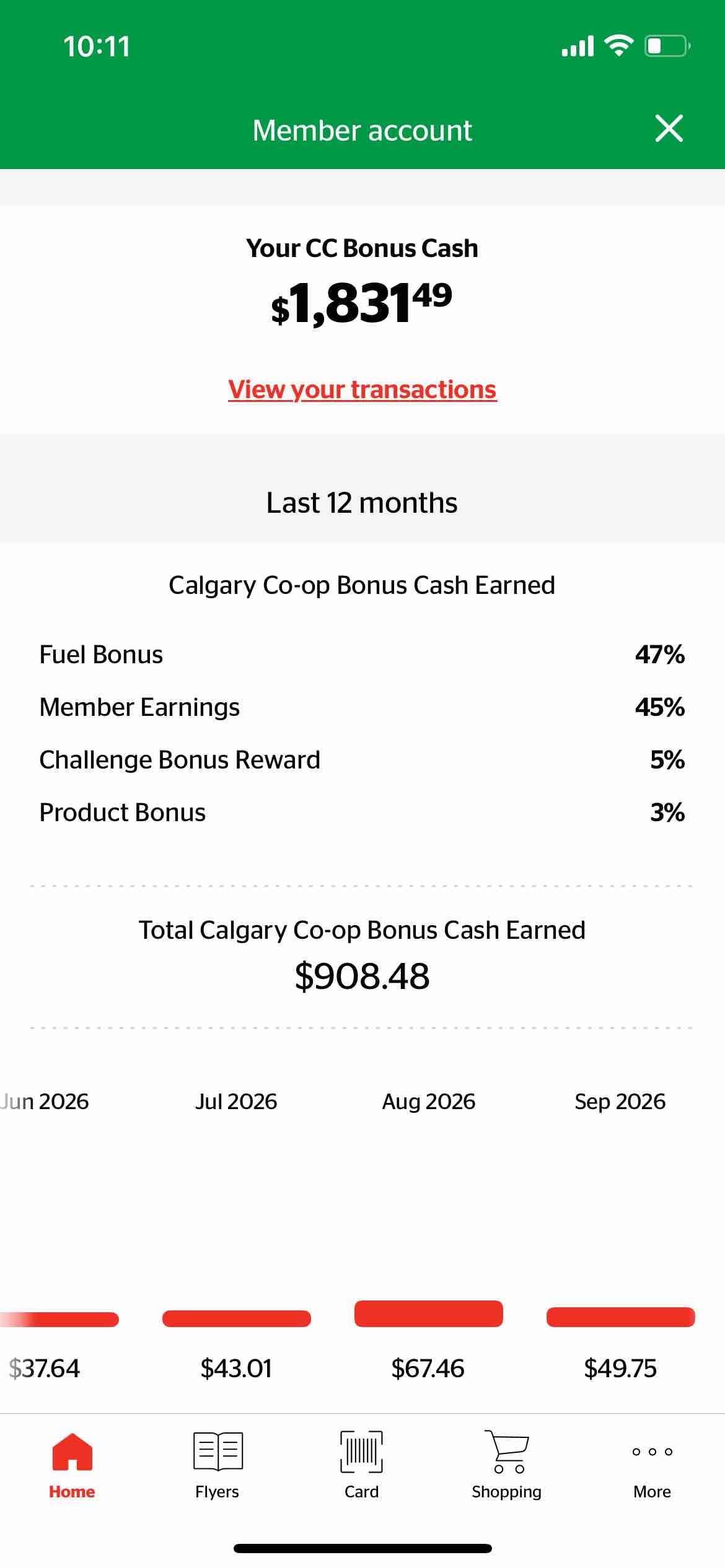
Last week my company issued fuel card for my work truck was not working properly. Called my boss and let them know and he was in a panic on how to get fuel for me without impacting production. My response was don’t worry about a thing. I’ll put it in my card just reimburse be on my next pay. His response was wow you’ll actually foot the bill? I was like damn right! I recieved $21.06 from my credit card NEO World Elite Mastercard $6.38 in cash back from Co-op 4 cents per litre plus another $6.38 4 cents per litre that will be added to my equity total that will be paid in January! Total of 8 cents per litre. Plus $5 cash back challenge rewards for purchase of more than 115l. So grand total of $32.44 cash in hand on money that I’m getting reimbursed for on my next pay check tax free. $410 fuel purchase! Which of course will all be invested! read more
I’ve asked Grok to explain the TFSA super cycle that’s becoming a topic that’s increasingly more popular. NOTE: This is the exact reason why I didn’t destroy my TFSA when I was All In on yieldmax. I basically removed all the distributions received to service credit card debt. Preserving the contribution room. Instead of allowing it to erode and permanently losing the room when I eventually sold out and went to better assets. That’s the tactic: Take every distribution out of the TFSA so next January 1 that exact dollar amount is added back as extra contribution room. It is not a special CRA rule for dividends. Any withdrawal works the same way. People isolate distributions because they want to keep the original contributed capital inside while using the income stream to manufacture next year’s room. What actually happens Assume the TFSA is already full. • January 1: you get the new annual limit ($7,000 in 2026) plus any unused room plus last year’s withdrawals. • You contribute and buy CDAY / SDAY / QDAY (or whatever pays). • Distributions hit the TFSA cash balance during the year. Those payments are not contributions and they do not use room. • You withdraw them. That is a withdrawal. Room does not come back until the next calendar year. • January 1: CRA adds last year’s withdrawals to your room. You can now put in the regular $7,000 plus every dollar you pulled out. If you left the distributions inside and dripped them, the TFSA would be larger, but you would get no extra contribution room. Market value and reinvested income never create room. Only withdrawals do. So the cycle is: contribute → collect income → withdraw income → next year the withdrawn income becomes new room for fresh after-tax dollars → repeat. Over time the contribution base (dollars you were allowed to put in) grows faster than if you never withdrew. The current TFSA market value grows slower, because cash left the shelter. What it does and does not do It does not create free room out of thin air. You only get next year what you took out this year. It does convert tax-free income into extra capacity to park new money tax-free. That only works if you actually have new money (paycheque, non-reg sale, margin proceeds, the withdrawn cash sitting in a taxable account) ready to go in on January 1. If you spend the distributions and have nothing to recontribute, you manufactured room you never fill. Same-year recontribution of those withdrawals uses current-year room. If the account is already maxed, that is an over-contribution. The trade-off Leave distributions in: bigger tax-free pile, same contribution room next year. Withdraw them: smaller tax-free pile today, larger contribution room next year so more new capital can enter the shelter. The “super” version only pays off if: 1 You will fill the extra room every January, and 2 You value maximizing dollars inside the TFSA over maximizing this year’s TFSA NAV, and 3 The cash sitting outside for a few months is not a problem (or you spend it and replace it with new savings). That is the whole cycle. Withdraw the distributions, wait for January 1, refill with a larger number. read more
Investors are getting fresh inflation numbers, a major jobs report, and another round of earnings from companies like Micron and Nike. That means the market will be forced to answer a few big questions: Can growth stay strong? Will inflation keep cooling? And will higher rates finally start weighing harder on stocks? TPC’s Sunday Market Watchlist covers the biggest catalysts you need on your radar. 👉 Tap in and read the full breakdown before the trading week begins. https://smartmoneymadesimple.substack.com/p/sunday-market-watchlist-the-week-a63?r=5t0c4hread more
For people who are interested in income investing, Steven Bavaria is one of the longer-running public voices in the space. He has been writing about income investing on Seeking Alpha for years and is the author of The Income Factory. This is from a recent interview he did where he explained the basic idea behind the strategy. The Income Factory theory, if you want to call it that, is actually pretty simple. Total return can be achieved just as much through cash income as it can through capital gains. If an investment earns a 10% total return, theoretically that return could come from a 10% yield and 0% capital appreciation, a 0% yield and 10% capital appreciation. When he was asked, “How do you measure the results of an Income Factory?” he answered the same way you should measure almost any investment strategy: total return. Total return is the most important statistic when you are trying to determine how the investment itself has actually performed. A fund can distribute 14% or 15% a year, but that does not necessarily mean the investor earned 14% or 15%. Bavaria explained it this way: “So, not to make it too complicated, but the key thing is if you collect 14% or 15%, which is great, don't assume that you're going to keep it all. You know, make sure you check the total return of that fund. And just look at it over time to make sure that the total return, what you've got after the erosion of price, is sufficient.” “And you'd say to yourself, okay, I collected 12%, but I gave back 4% in the erosion of the price or the net asset value, so my net return is 8%. Now, that would be step one. And you might then say, well, 8%, that's still a decent total return. If my overall portfolio over many years earned 8% to 9%, that'd be fine. But you'd have to then make sure that if you got 12% but really were only earning 8% because four of it was being eroded away in the price, in the NAV, you'd want to make sure that at the very least you reinvested 4% of that 12%. And that would only just keep you even.” You can watch the whole interview below The Income Factory | Generating Monthly Cash Flow With 9%+ Yields (Steven Bavaria) https://www.youtube.com/watch?v=-cC91dSmiJQ read more
When I first met Leon at my first Blossom event, his channel didn't exist yet, and I was still working full-time. By the time the second Blossom event rolled around, so much had changed for both of us:) I reached FI and Leon successfully launched his channel, and he continues to grow his portfolio and channel!🚀 He invited me to come on his channel to share my story, and we had an amazing chat. Thank you, @leonsmoneyflow for having me! Check out the full video here; https://www.youtube.com/watch?v=9pCiuqGZZFg
I think during the portfolio building phase i got too wrapped up in diversification rather than focus on funds that i have conviction in. $UTES and $PAYI were exactly that. I didnt know why i had them i just knew people said it was good to have. But after watching these both tank over the last few months, especially in this bond yield environment, i trimmed it and reallocated to funds i think will be more fruitful for this specific portfolios purpose of feeding my registered accounts.
Added to my $SPXE , $HHLE , $CCHI , $MSTE , $SSHI positions using Sept distributions and some additional funds before tomorrows ex-div date This should increass my monthly income from CC-ETF’s by about 7-8%